Weihai, Shandong tide times
Weihai, Shandong tide forecast — heights relative to MSL.
Today's tide times for Weihai, Shandong
Tide times at Weihai, Shandong on Monday, 3 August 2026: first low tide at 08:00am, first high tide at 12:20pm, second low tide at 06:27pm. Sunrise 04:56am, sunset 06:59pm.
Tide chart for Weihai, Shandong
24-hour cosine-interpolated curve around the present moment. Heights relative to MSL. Predictions: Predictions: Open-Meteo Marine (MeteoFrance SMOC, 0.08° grid).
Sun, moon and conditions on Mon 03 Aug
Snapshot at build time — refreshes daily. Sea state from Open-Meteo Marine.
Highs and lows next 7 days
Every predicted high and low for the next week, with the daily tidal coefficient (0–120; higher = bigger swing, > 95 means stronger currents).
Other spots nearby
The three closest curated TideTurtle locations to Weihai, Shandong, measured by great-circle distance.
Today's solunar windows
Solunar tradition: major periods are the ≈3h windows around moon transit and opposition; minor are ≈2h around moonrise and moonset. Pair with the local tide stage and wind for the best read.
Cycle dates near Weihai, Shandong
Last spring tide on Mon 03 Aug (range 2.1m). Next neap on Sat 08 Aug.
Spring tides cluster around new and full moons (biggest swings). Neap tides land on quarter moons (smallest swings). See the spring tide and neap tide glossary entries for the why.
About tides at Weihai, Shandong
A short guide to the coastline at Weihai, Shandong — geography, sea state, and what the tide is actually doing under your feet.
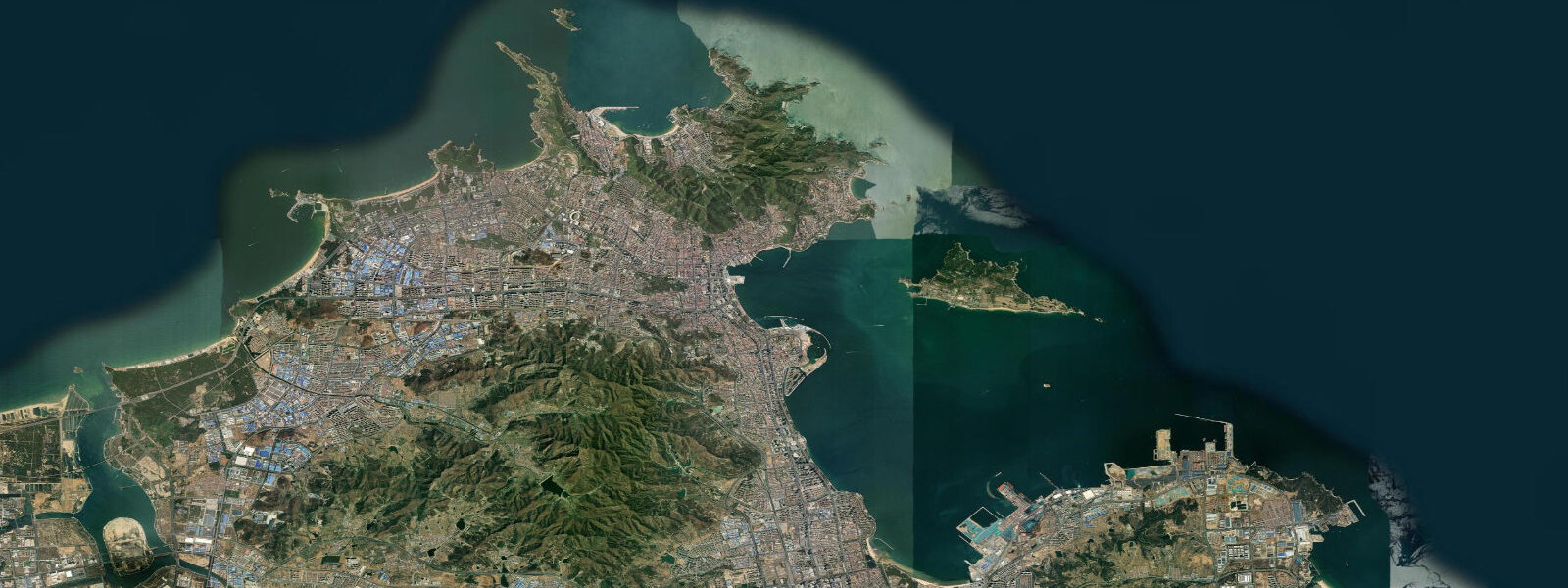
Weihai (威海) occupies the eastern tip of the Shandong Peninsula, where the Yellow Sea opens wide and the Korean Peninsula lies 300 km east across open water — visible on exceptional clear days as a faint blue line above the horizon. The city's waterfront curves in a gentle arc facing east, catching the first light of any sunrise on the Chinese mainland at this latitude.
The Yellow Sea produces a well-behaved semidiurnal tide here: two highs and two lows every 24 hours and 50 minutes, with a mean spring range of 1.5–2.5 m. That range is moderate compared to the funnel bays to the south — Hangzhou Bay, the Yangtze mouth — but it is regular and readable, which matters when planning time on the water. Low water typically exposes a band of rocky and sandy foreshore along Weihai Bay that's 50–150 m wide depending on the point in the spring-neap cycle.
Liugong Island (刘公岛) sits 7 km offshore, a 30-minute ferry ride from the Weihai waterfront terminal. The island is best known for what happened here in February 1895 — the Battle of Weihaiwei, the decisive engagement of the First Sino-Japanese War. The Beiyang Fleet, China's first modern naval force and the product of 20 years of naval modernisation, was blockaded in this harbour and destroyed over a siege lasting several weeks. Admiral Ding Ruchang went down with the fleet rather than surrender. The defeat effectively ended China's first attempt to build a modern navy and accelerated the terms of the Treaty of Shimonoseki. The island is now a National Forest Park; the Beiyang Fleet museum contains the original torpedo boats and naval artillery from the 1895 engagements, and the fortifications on the island's southern shore are intact. The ferry crossing takes 30 minutes and runs regular departures throughout the day. The tidal current between the island and the mainland is mild enough that the ferry schedule is not tide-dependent, though the crossing is choppier in the afternoon when northeast winds pick up.
Aquaculture visible from the waterfront and from the ferry crossing tells the other story of Weihai Bay. Sea cucumber (刺参, Stichopus japonicus) and kelp are farmed in float-cage and long-line systems across the inner bay. The float-cage arrays shift slowly with the tidal current — you can watch the direction of current flow from a fixed position on the promenade by tracking the alignment of the floats. Sea cucumber is a high-value product in the regional market; Weihai's cold, clean Yellow Sea water is considered premium habitat, and the Weihai-origin label commands a price premium over product from further south. Harvest windows are controlled by water temperature, not tide, but the tidal current keeps the cage systems aerated and prevents stagnation.
Eighty-five kilometres east, the Chengshantou Scenic Area (成山头) is the easternmost cape of the Shandong Peninsula, sometimes called China's Cape Horn — a cliff headland where the Yellow Sea coast ends and the Bohai Strait begins. Tidal currents converge around the point from both sides and reach 2–3 knots on spring tides. On a spring ebb the surface is visibly textured with rip lines and eddies where the two tidal streams collide. The cape road is a scenic drive from Weihai city — allow 90 minutes each way. The current rip around Chengshantou is navigable by experienced coastal kayakers who time the crossing to the slack, but it's not a place to drift into on a neap-tide paddle without checking the tide tables.
The city beach faces east and gets direct morning light from around 05:00 in summer — early enough that the beach is empty and the water surface is still. Photographers working the foreshore at low water in that light find exposed rocks with mussel and barnacle growth that add foreground texture to the sea horizon. The beach crowd arrives later; the working hours for photography are the first two hours of daylight.
Anglers work the harbour breakwater and the rocky shore south of the ferry terminal. Flounder, rockfish, and hairtail are the primary target species. Low water on spring tides exposes more of the rocky structure along the southern bay, giving access to ground that's unreachable at high water.
Tide data for Weihai, Shandong comes from the Open-Meteo Marine API, a gridded model product. Timing accuracy is ±45 minutes, height accuracy ±0.3 m — usable for trip planning, not for navigation.
Tide questions about Weihai, Shandong
Quick answers to the most common questions about tide times, range, and water access at Weihai, Shandong.
What is the tidal range at Weihai and how does it affect the waterfront?
Mean spring tidal range at Weihai is 1.5–2.5 m, producing two highs and two lows per day. At low spring water a band of rocky and sandy foreshore 50–150 m wide is exposed along the inner bay. The range is moderate — not the drama of Hangzhou Bay to the south — but the pattern is regular and easy to plan around. Neap tides reduce the range to around 0.8–1.2 m. The tidal current across the bay is mild, running roughly 0.3–0.8 knots on springs, which is why the ferry to Liugong Island operates on a schedule independent of the tide.
What happened at Liugong Island in 1895 and why does it matter?
In February 1895, during the Battle of Weihaiwei, the Japanese Imperial Navy blockaded the Beiyang Fleet in Weihai harbour — China's first modern naval force, built over two decades of Qing-era naval reform. After a siege of several weeks, the fleet was destroyed through a combination of torpedo attack, artillery bombardment, and surrender. Admiral Ding Ruchang chose suicide over capitulation. The defeat ended China's first serious attempt at naval modernisation and set the terms for the Treaty of Shimonoseki, including the cession of Taiwan. The Beiyang Fleet museum on Liugong Island holds the original torpedo boats and shore fortifications from the battle.
How do I reach Liugong Island and what is the crossing like?
Ferries depart from the Weihai waterfront terminal and cross the 7 km to Liugong Island in approximately 30 minutes. Departures run throughout the day; the first boat typically leaves before 08:00. The crossing is tide-independent — the tidal current between the island and mainland is mild. Wind conditions affect the ride: northeast winds above Force 4 make the crossing choppier but services are not cancelled in normal weather. Tickets are purchased at the terminal. The island is a full-day visit: museum, fortifications, forest trails, and the southern cliff walk looking out to the open Yellow Sea.
What is Chengshantou and how far is it from Weihai?
Chengshantou (成山头) is the easternmost cape of the Shandong Peninsula, 85 km east of Weihai city by road. The cape is a cliff headland where tidal streams from the Yellow Sea and the Bohai Strait converge — spring tidal currents around the point reach 2–3 knots and are visible as rip lines and eddies on the surface. It's sometimes called China's Cape Horn. The drive takes 90 minutes from Weihai and the Scenic Area at the tip has viewing platforms over the convergence point. Experienced coastal kayakers occasionally time a circumnavigation of the cape at tidal slack, but the rip on a spring ebb is not casual water.
When is the best time to fish the Weihai waterfront?
Low water on spring tides exposes the most rocky structure along the southern bay and gives the best platform access along the harbour breakwater. Flounder and rockfish hold in the shallow reef ground exposed on the ebb; hairtail run in the deeper channel margin on the last two hours of ebb. Bring rigs weighted for a moderate tidal current — 0.5–0.8 knots on springs is enough to drift an unweighted bait off the target. Early morning sessions before the city traffic begins are quieter and — when the water is calm — produce better visual conditions for spotting fish movement near the surface.
8-day tide table — Weihai, Shandong
Heights relative to MSL. Predictions: Open-Meteo Marine (MeteoFrance SMOC, 0.08° grid) — heights relative to MSL (not chart datum / LAT). Model-derived.
| Day | Type | Time | Height |
|---|---|---|---|
| Mon 03 Aug | Low | 08:00 | -0.1m |
| High | 12:20 | 1.3m | |
| Low | 18:27 | -0.8m | |
| Tue 04 Aug | High | 00:53 | 1.3m |
| Low | 06:48 | -0.6m | |
| High | 13:02 | 1.2m | |
| Low | 19:03 | -0.7m | |
| Wed 05 Aug | High | 01:32 | 1.3m |
| Low | 07:32 | -0.6m | |
| High | 13:50 | 1.2m | |
| Low | 19:45 | -0.6m | |
| Thu 06 Aug | High | 02:13 | 1.3m |
| Low | 08:22 | -0.5m | |
| Fri 07 Aug | High | 03:05 | 1.4m |
| Low | 09:19 | -0.3m | |
| High | 15:41 | 1.0m | |
| Low | 21:23 | -0.1m | |
| Sat 08 Aug | High | 04:09 | 1.5m |
| Low | 10:42 | -0.2m | |
| Sun 09 Aug | High | 05:19 | 1.4m |
| Low | 12:20 | -0.3m | |
| Mon 10 Aug | High | 07:00 | 1.3m |