Cavendish, PEI tide times
Cavendish, PEI tide forecast — heights relative to MSL.
Today's tide times for Cavendish, PEI
Tide times at Cavendish, PEI on Tuesday, 4 August 2026: first high tide at 09:00am, first low tide at 02:55pm, second high tide at 10:10pm. Sunrise 05:58am, sunset 08:40pm.
Tide chart for Cavendish, PEI
24-hour cosine-interpolated curve around the present moment. Heights relative to MSL. Predictions: Predictions: Open-Meteo Marine (MeteoFrance SMOC, 0.08° grid).
Sun, moon and conditions on Tue 04 Aug
Snapshot at build time — refreshes daily. Sea state from Open-Meteo Marine.
Highs and lows next 7 days
Every predicted high and low for the next week, with the daily tidal coefficient (0–120; higher = bigger swing, > 95 means stronger currents).
Other spots nearby
The three closest curated TideTurtle locations to Cavendish, PEI, measured by great-circle distance.
Today's solunar windows
Solunar tradition: major periods are the ≈3h windows around moon transit and opposition; minor are ≈2h around moonrise and moonset. Pair with the local tide stage and wind for the best read.
Cycle dates near Cavendish, PEI
Next spring tide on Sat 08 Aug (range 1.0m). Last neap on Mon 03 Aug.
Spring tides cluster around new and full moons (biggest swings). Neap tides land on quarter moons (smallest swings). See the spring tide and neap tide glossary entries for the why.
About tides at Cavendish, PEI
A short guide to the coastline at Cavendish, PEI — geography, sea state, and what the tide is actually doing under your feet.
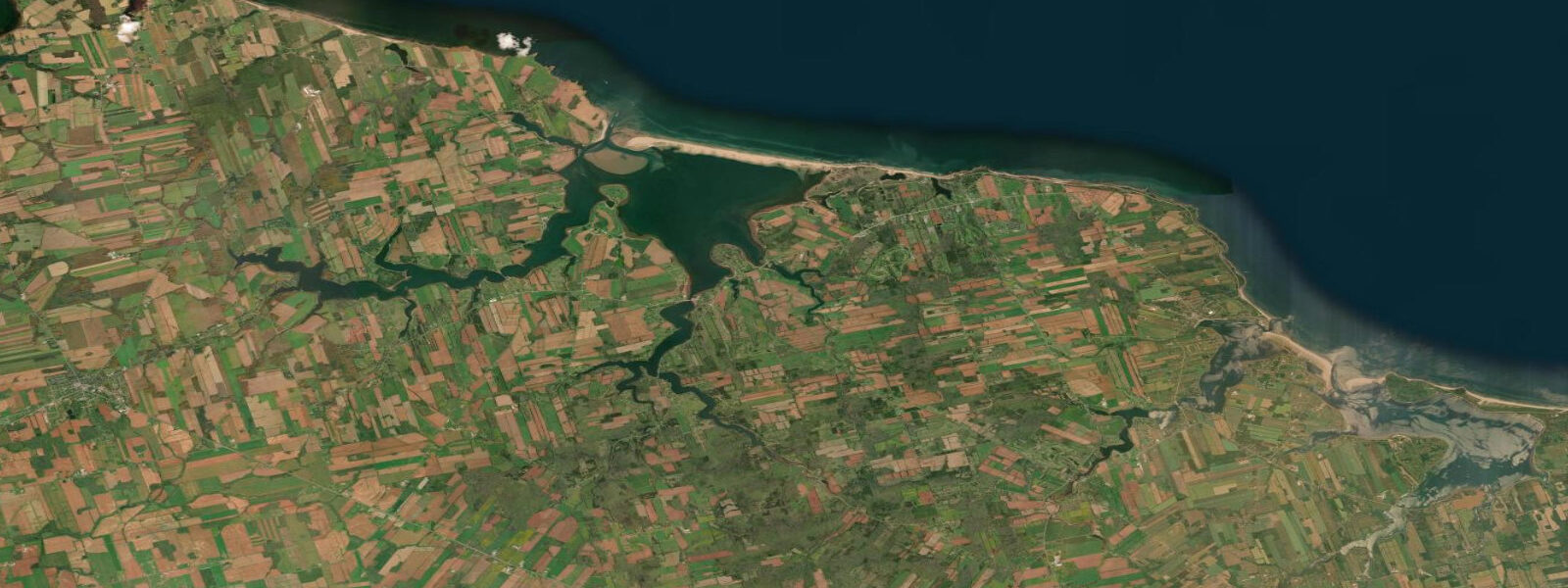
Cavendish is on PEI's north shore, facing the open Gulf of St. Lawrence across a broad arc of red-sand beach interrupted by freshwater ponds separated from the sea by narrow sand barriers. Tidal range here is lower than on PEI's south coast: approximately 0.7 metres mean range, with spring range around 0.9 metres. The shallower Gulf geometry means tidal forcing is weaker on this north shore; the tidal cycle is still semidiurnal but the vertical change is modest enough that beach width changes less dramatically than at comparable macrotidal beaches.
The beach is the dominant fact. Cavendish Beach, within Prince Edward Island National Park, runs approximately 8 kilometres of continuous red sand backed by dunes and the PEI National Park boundary. The red colour comes from iron-rich Permian sandstone underlying the whole island — iron oxide staining the sand and the eroding cliffs at the western end of the beach. The cliffs erode at roughly 30 centimetres per year on exposed sections; red sandstone fragments are visible at the base of the dunes and in the intertidal zone at low water.
The water temperature is the north shore's main draw from a swimming perspective. The shallow Gulf warms to 20°C or above by late July and holds those temperatures through mid-August — comparable to Nova Scotia's south shore but warmer than the open Atlantic beaches south of Halifax. The Cavendish beach is the busiest on PEI from mid-July through mid-August; low-tide beach width is fully accessible for the whole tidal cycle given the modest 0.7 metre range.
Green Gables Heritage Place, 3 kilometres south of the beach in the agricultural interior, is the farmhouse that inspired the setting of Lucy Maud Montgomery's Anne of Green Gables (1908). Montgomery lived in Cavendish as a girl and set her novel in the surrounding countryside. The house and grounds are a national historic site and the most visited literary landmark in Canada; the surrounding farm is maintained in the period style. The Cavendish cemetery contains Montgomery's grave.
The Cavendish area has the highest tourist infrastructure density on PEI — resorts, cottages, golf courses, amusement parks, and outlet stores concentrated along the Route 6 corridor. From a coastal-access perspective, the national park beach is the best-quality experience; the commercial strip behind it is dense and utilitarian. The quieter sections of the north shore east and west of Cavendish — Stanhope, North Rustico Harbour, Brackley Beach — have better dune and estuary access with less development pressure.
Tide predictions on this page come from Open-Meteo Marine, a gridded global ocean model. Accuracy is typically within plus or minus 45 minutes on timing and 0.2 to 0.3 metres on height — model-derived, not from a DFO gauge on this specific section of the north shore. For authoritative official Canadian predictions, consult Fisheries and Oceans Canada (DFO) at tides.gc.ca.
Tide questions about Cavendish, PEI
Quick answers to the most common questions about tide times, range, and water access at Cavendish, PEI.
What is the tidal range at Cavendish and how does it affect the beach?
Mean tidal range at Cavendish is approximately 0.7 metres; spring range is around 0.9 metres. This is noticeably lower than PEI's south coast (Charlottetown, 1.2 m) or Summerside (1.8 m), reflecting the north shore's Gulf of St. Lawrence exposure and its weaker tidal forcing. The practical effect is that the beach width changes modestly through the tidal cycle — the full beach is largely accessible at all states of tide. At low water the intertidal zone extends further offshore and the water is shallower for a longer stretch from shore, which affects swimming depth access. The modest range also means rip current risk is relatively low compared to macrotidal beaches.
What is the connection between Cavendish and Anne of Green Gables?
Lucy Maud Montgomery was born in Clifton (now New London), PEI in 1874 and grew up largely in Cavendish after her mother's early death, living with her maternal grandparents. She set her 1908 novel Anne of Green Gables in the Cavendish countryside, using the neighbouring Macneill farm — known as Green Gables — as the physical model for the home of Anne Shirley. The house, now Green Gables Heritage Place and part of PEI National Park, is preserved as a national historic site. Montgomery is buried in the Cavendish cemetery. The novel has been continuously in print since 1908 and has been translated into 36 languages; the Anne of Green Gables franchise is a significant driver of PEI's tourism economy.
When is the best time to swim at Cavendish beach?
Late July and the first two weeks of August are the peak window for swimming at Cavendish — Gulf of St. Lawrence water temperatures reach 20°C or slightly above, the beach is at full summer development, and the national park lifeguard service is operating. The water is warmest in the afternoon after a day of solar heating of the shallow Gulf. Earlier in July the water is 16 to 18°C, which is swimmable but noticeably cooler; by late August temperatures begin dropping back toward 17 to 18°C. The beach faces northwest, so afternoon sun warms the sand until early evening.
What else is worth visiting on PEI's north shore near Cavendish?
North Rustico Harbour, 5 kilometres east of Cavendish, is a small working fishing harbour where the lobster fleet lands its catch — the contrast with the commercial Cavendish strip is sharp. Brackley Beach (10 km east) and Stanhope Beach (15 km east) are national park beaches with fewer facilities and better dune system integrity than Cavendish. The Cavendish Boardwalk trail within the national park walks the dune-beach boundary. New London Bay and Rustico Bay, both accessible from Route 6, are warm shallow bays where kayaking on a falling tide reveals sandbars and estuary birds. PEI's Confederation Trail, a converted railway right-of-way, passes through Cavendish and is accessible for cycling year-round.
Are the tide predictions on this page official forecasts I can use for navigation or safety planning?
No. The predictions shown here come from Open-Meteo Marine, a global ocean model with typical accuracy of plus or minus 45 minutes on timing and 0.2 to 0.3 metres on height. They are appropriate for general beach and coastal planning — understanding the tidal cycle, timing a kayak on the estuary, or reading beach conditions — not for vessel navigation or any safety-critical decision. For authoritative official Canadian predictions for the PEI north shore, use Fisheries and Oceans Canada (DFO) at tides.gc.ca. Cavendish sits within an exposed section of the Gulf of St. Lawrence; wind-driven storm surge in autumn and winter can significantly exceed predicted tide heights.
7-day tide table — Cavendish, PEI
Heights relative to MSL. Predictions: Open-Meteo Marine (MeteoFrance SMOC, 0.08° grid) — heights relative to MSL (not chart datum / LAT). Model-derived.
| Day | Type | Time | Height |
|---|---|---|---|
| Tue 04 Aug | High | 09:00 | -0.3m |
| Low | 14:55 | -0.7m | |
| High | 22:10 | -0.1m | |
| Wed 05 Aug | Low | 14:50 | -0.7m |
| High | 22:56 | -0.0m | |
| Thu 06 Aug | Low | 05:54 | -0.6m |
| High | 11:06 | -0.4m | |
| Low | 15:15 | -0.6m | |
| High | 23:42 | 0.1m | |
| Fri 07 Aug | Low | 07:06 | -0.6m |
| High | 11:54 | -0.5m | |
| Low | 15:18 | -0.7m | |
| Sat 08 Aug | High | 00:36 | 0.1m |
| Low | 10:50 | -0.7m | |
| Sun 09 Aug | High | 01:36 | 0.2m |
| Low | 11:50 | -0.7m | |
| Low | 16:10 | -0.7m | |
| Mon 10 Aug | High | 02:43 | 0.2m |