Bombinhas tide times
Bombinhas tide forecast — heights relative to MSL.
Today's tide times for Bombinhas
Tide times at Bombinhas on Monday, 3 August 2026: first high tide at 04:06, first low tide at 09:54, second high tide at 16:35, second low tide at 21:42. Sunrise 06:53, sunset 17:47.
Tide chart for Bombinhas
24-hour cosine-interpolated curve around the present moment. Heights relative to MSL. Predictions: Predictions: Open-Meteo Marine (MeteoFrance SMOC, 0.08° grid).
Sun, moon and conditions on Mon 03 Aug
Snapshot at build time — refreshes daily. Sea state from Open-Meteo Marine.
Highs and lows next 7 days
Every predicted high and low for the next week, with the daily tidal coefficient (0–120; higher = bigger swing, > 95 means stronger currents).
Other spots nearby
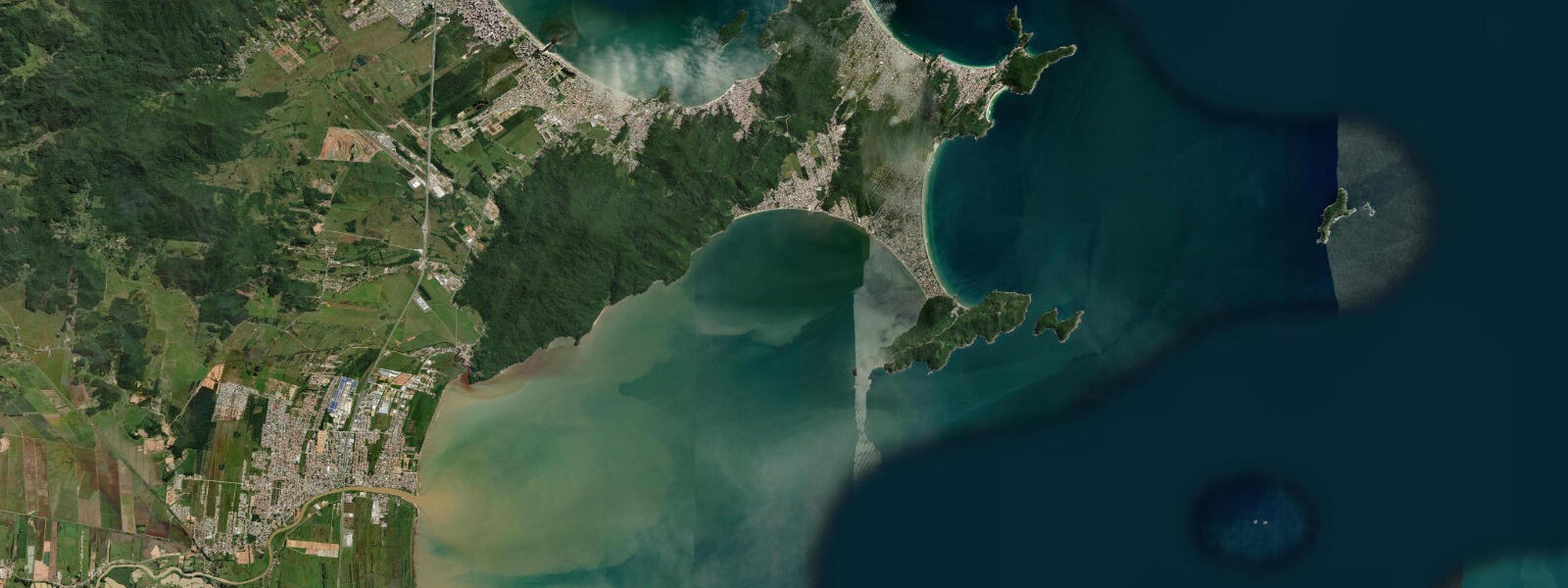
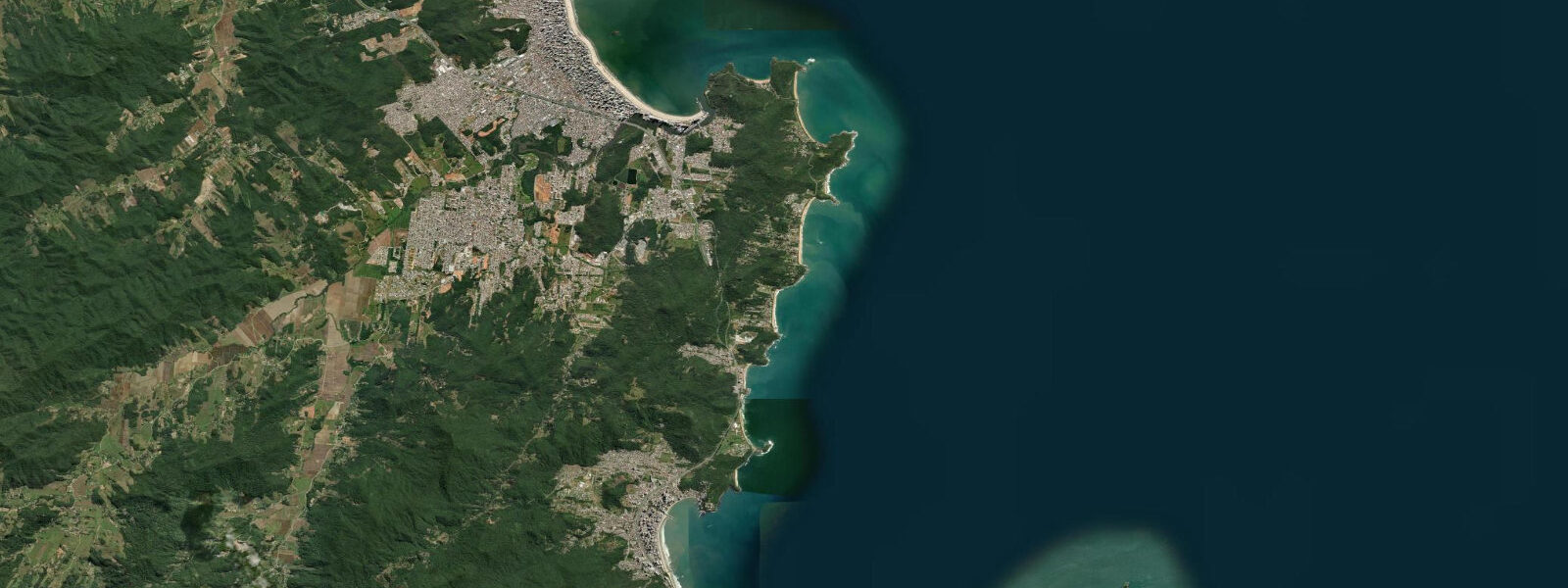
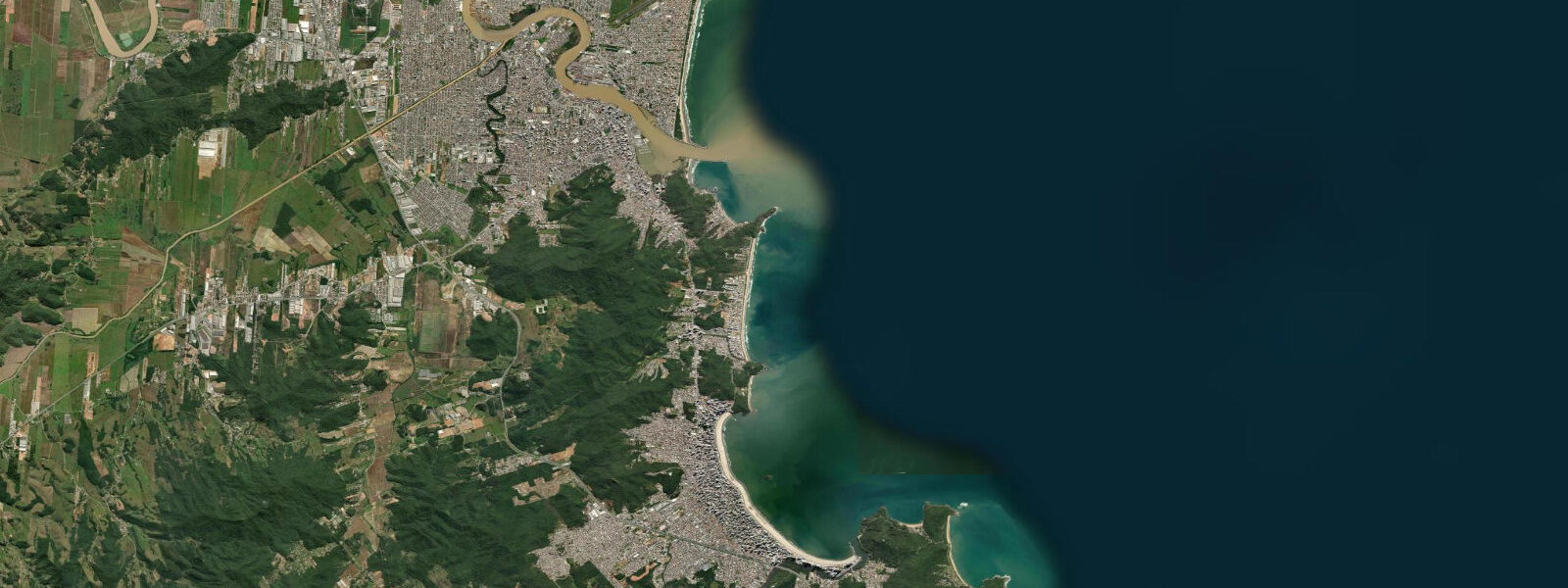
The three closest curated TideTurtle locations to Bombinhas, measured by great-circle distance.
Today's solunar windows
Solunar tradition: major periods are the ≈3h windows around moon transit and opposition; minor are ≈2h around moonrise and moonset. Pair with the local tide stage and wind for the best read.
Cycle dates near Bombinhas
Last spring tide on Sun 02 Aug (range 0.8m). Next spring tide on Sat 08 Aug (range 1.0m). Next neap on Wed 05 Aug.
Spring tides cluster around new and full moons (biggest swings). Neap tides land on quarter moons (smallest swings). See the spring tide and neap tide glossary entries for the why.
About tides at Bombinhas
A short guide to the coastline at Bombinhas — geography, sea state, and what the tide is actually doing under your feet.
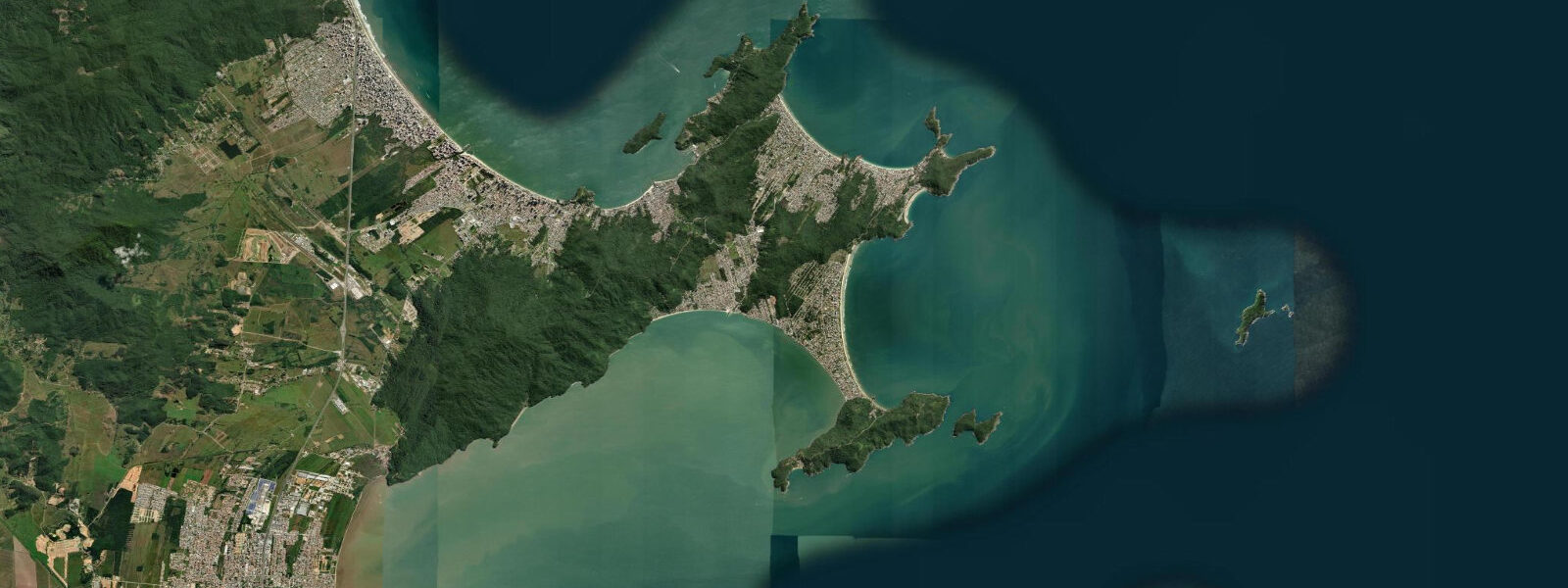
Bombinhas is a peninsula municipality on the central Santa Catarina coast, projecting southeast into the South Atlantic roughly 60 kilometres north of Florianópolis. The peninsula is narrow enough that beaches face in multiple directions, each with distinct exposure characteristics, and it is compact enough that walking between the main beaches takes 20 to 30 minutes. The tidal regime is semidiurnal with a mean spring range of approximately 1.0 metre — typical for this section of the Santa Catarina coast.
Bombas and Bombinhas beaches occupy opposite flanks of the peninsula. Bombas faces northwest across the Zimbros embayment toward the mainland, sheltered from Atlantic swell by the headlands to the south and by the peninsula body itself. The result is typically calm, flat water — a beach for swimming laps parallel to shore, children's play, and watching the morning fishing boat activity from the sand. Bombinhas faces east-northeast, open to the dominant Atlantic swell fetch. When east swell is running, Bombinhas Beach has consistent rideable surf on the beach break at the south end and moderate shore dump across the main stretch. Both beaches share a peninsula, but the conditions on a given day can differ by 1.0 to 1.5 metres of wave height.
Mariscal Beach, at the south end of the Bombinhas Peninsula, faces south and is significantly wilder than the main tourist beaches — rockier, less developed, with access requiring either a walk over the headland from Bombinhas or a road via the back of the peninsula. The rocky reef off Mariscal provides snorkelling in 3 to 8 metres of water with visibility of 5 to 10 metres on calm days with settled conditions. The best visibility follows a run of light wind and no recent swell or rain, which reduces turbidity. Winter (June through August), when the tourist load drops and the water settles between cold fronts, often offers better visibility than summer despite lower water temperature.
The Reserva Biológica Marinha do Arvoredo lies approximately 10 kilometres offshore — four islands and surrounding sea area under strict biological reserve classification, meaning access requires a research permit and is not open for recreational diving or snorkelling. This is the clearest water in southern Brazil, with visibility reportedly exceeding 20 metres in ideal conditions. Its inaccessibility is part of why it is biologically intact.
The sea temperature off Bombinhas is influenced by the cold South Atlantic Current (sometimes called the Falklands/Malvinas Current system in its offshore expression), which makes water here noticeably cooler than the northeast Brazilian coast — typically 18 to 24°C in summer and 14 to 18°C in winter. This limits coral development to isolated rocky outcrops rather than the reef systems of the northeast, but it supports a different species assemblage including abundant octopus, grouper, and sea urchin on the rocky substrates.
Predictions on this page come from Open-Meteo Marine, a gridded global ocean model. Accuracy is typically within plus or minus 45 minutes on timing and 0.2 to 0.3 metres on height — model-derived, not from a local gauge. For authoritative Brazilian tide data, consult the Centro de Hidrografia da Marinha (CHM) at mar.mil.br/chm.
Tide questions about Bombinhas
Quick answers to the most common questions about tide times, range, and water access at Bombinhas.
What is the difference between Bombas Beach and Bombinhas Beach?
Bombas faces northwest, sheltered from Atlantic swell by the peninsula body and surrounding headlands. On most days it has flat to minimal wave conditions, making it the better choice for families with young children and for swimming in calm water. Bombinhas faces east-northeast and receives open Atlantic swell — when an east swell is running, Bombinhas has visible surf and a stronger shore break, which can be rough for non-swimmers but appealing for bodyboarders and surfers. A practical approach: check the swell forecast and, if east swell exceeds 1.5 metres, use Bombas for swimming and Bombinhas for wave play.
Is snorkelling good at Mariscal Beach?
The rocky reef off Mariscal Beach provides accessible snorkelling in 3 to 8 metres of water. Visibility ranges from 5 to 10 metres under good conditions — light wind, no recent swell, and low rainfall in the preceding days to limit freshwater turbidity runoff. Winter (June through August) often delivers better visibility than summer because lower tourist density and fewer boat movements reduce sediment disturbance, even though water temperature drops to 14 to 18°C. A wetsuit is practical in winter. Access to Mariscal requires walking over the headland from the Bombinhas main beach area or driving via the back road — it is less developed and less crowded than the main beaches.
Why can't visitors access the Arvoredo Marine Reserve?
The Reserva Biológica Marinha do Arvoredo is classified as a strict biological reserve under Brazilian environmental law, the highest protection category in the national system. Recreational access — diving, snorkelling, swimming, anchoring boats — is not permitted without a formal research permit issued by ICMBio (the federal conservation agency). The restriction exists precisely because the isolation has preserved a marine community that no longer exists in accessible nearshore waters. Enforcement includes fines and vessel confiscation for unauthorised entry. Boat operators offering trips to Arvoredo without a permit are operating illegally; the proximity of the islands to Bombinhas (approximately 10 km) generates regular demand that is not legally available to meet.
How cold is the water at Bombinhas compared to other Brazilian beaches?
Significantly colder. The South Atlantic Current brings cooler subantarctic water north along the Santa Catarina coast, keeping surface temperatures at 18 to 24°C in summer and 14 to 18°C in winter. This is the same reason the southern Santa Catarina coast lacks the expansive coral reef systems of Bahia or the northeast — water temperature limits coral growth to isolated rocky outcrops. For snorkellers, the colder water is offset by better visibility in winter compared to the murky near-shore waters of warmer, more productive tropical coasts. A 3mm wetsuit is useful from May through September; most visitors swim without one in summer.
What marine life is visible when snorkelling off the Bombinhas reefs?
The rocky substrate off Mariscal and the other Bombinhas reefs supports a temperate-to-subtropical assemblage: octopus (Octopus vulgaris is abundant and visible), grouper (mero), sea bass species, sea urchins on all rock surfaces, diverse wrasse species, and significant coverage of encrusting sponges and bryozoans in deeper sections. Stingrays are common on the sandy areas between reef outcrops — shuffle your feet in shallow sand to avoid them. The fish diversity is lower than the coral reef systems of the northeast but encounter density for octopus and grouper is often higher on a single snorkel session. Avoid disturbing the sea urchins — their spines are fragile but the points are sharp.
7-day tide table — Bombinhas
Heights relative to MSL. Predictions: Open-Meteo Marine (MeteoFrance SMOC, 0.08° grid) — heights relative to MSL (not chart datum / LAT). Model-derived.
| Day | Type | Time | Height |
|---|---|---|---|
| Mon 03 Aug | High | 04:06 | 0.5m |
| Low | 09:54 | -0.3m | |
| High | 16:35 | 0.3m | |
| Low | 21:42 | -0.2m | |
| Tue 04 Aug | High | 04:51 | 0.3m |
| Low | 10:00 | -0.3m | |
| High | 17:20 | 0.2m | |
| Low | 21:40 | -0.2m | |
| Wed 05 Aug | High | 01:10 | -0.1m |
| Low | 01:42 | -0.1m | |
| High | 05:51 | 0.2m | |
| Low | 10:00 | -0.1m | |
| High | 13:06 | -0.0m | |
| Low | 14:40 | -0.1m | |
| High | 18:12 | 0.2m | |
| Low | 21:55 | -0.1m | |
| Thu 06 Aug | High | 01:00 | 0.0m |
| Low | 03:18 | -0.1m | |
| High | 07:00 | 0.3m | |
| Low | 10:10 | 0.1m | |
| High | 13:00 | 0.1m | |
| Low | 16:16 | -0.0m | |
| High | 19:12 | 0.2m | |
| Low | 22:20 | -0.0m | |
| Fri 07 Aug | High | 01:21 | 0.1m |
| Low | 04:19 | -0.1m | |
| High | 13:18 | 0.4m | |
| Low | 17:24 | 0.1m | |
| High | 20:12 | 0.2m | |
| Sat 08 Aug | High | 01:00 | 0.2m |
| Low | 05:20 | -0.2m | |
| High | 13:15 | 0.5m | |
| Low | 18:16 | -0.1m | |
| High | 22:15 | 0.2m | |
| Sun 09 Aug | Low | 06:00 | -0.3m |
| High | 13:18 | 0.7m | |
| Low | 19:04 | 0.1m |