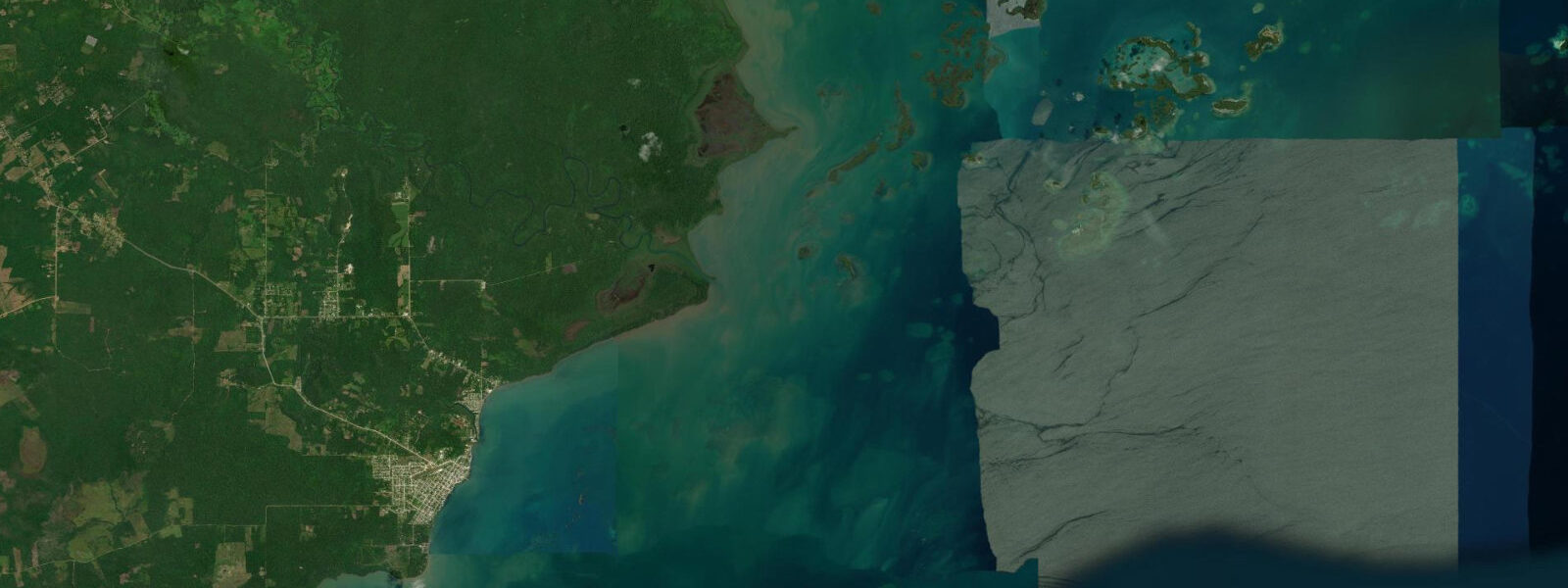
Punta Gorda, Belize tide times
Punta Gorda, Belize tide forecast — heights relative to MSL.
Today's tide times for Punta Gorda, Belize
Tide times at Punta Gorda, Belize on Monday, 3 August 2026: first high tide at 06:00pm. Sunrise 05:36am, sunset 06:26pm.
Tide chart for Punta Gorda, Belize
24-hour cosine-interpolated curve around the present moment. Heights relative to MSL. Predictions: Predictions: Open-Meteo Marine (MeteoFrance SMOC, 0.08° grid).
Sun, moon and conditions on Mon 03 Aug
Snapshot at build time — refreshes daily. Sea state from Open-Meteo Marine.
Highs and lows next 7 days
Every predicted high and low for the next week, with the daily tidal coefficient (0–120; higher = bigger swing, > 95 means stronger currents).
Other spots nearby
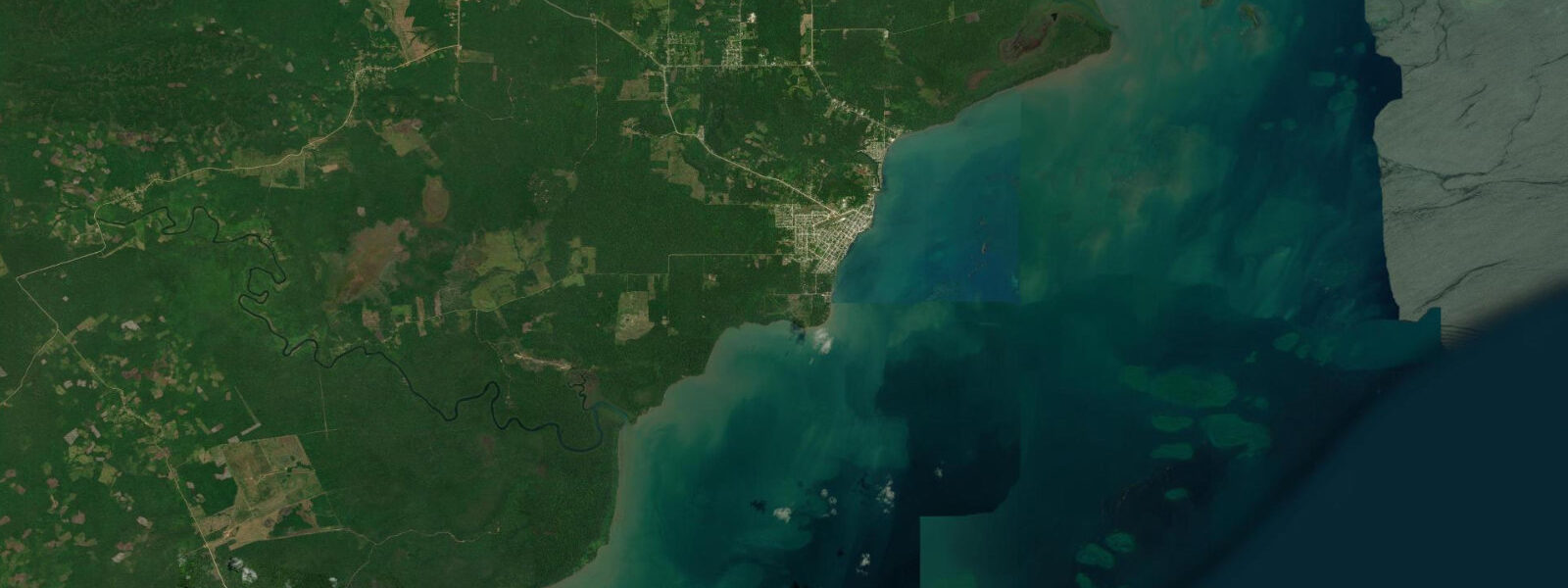
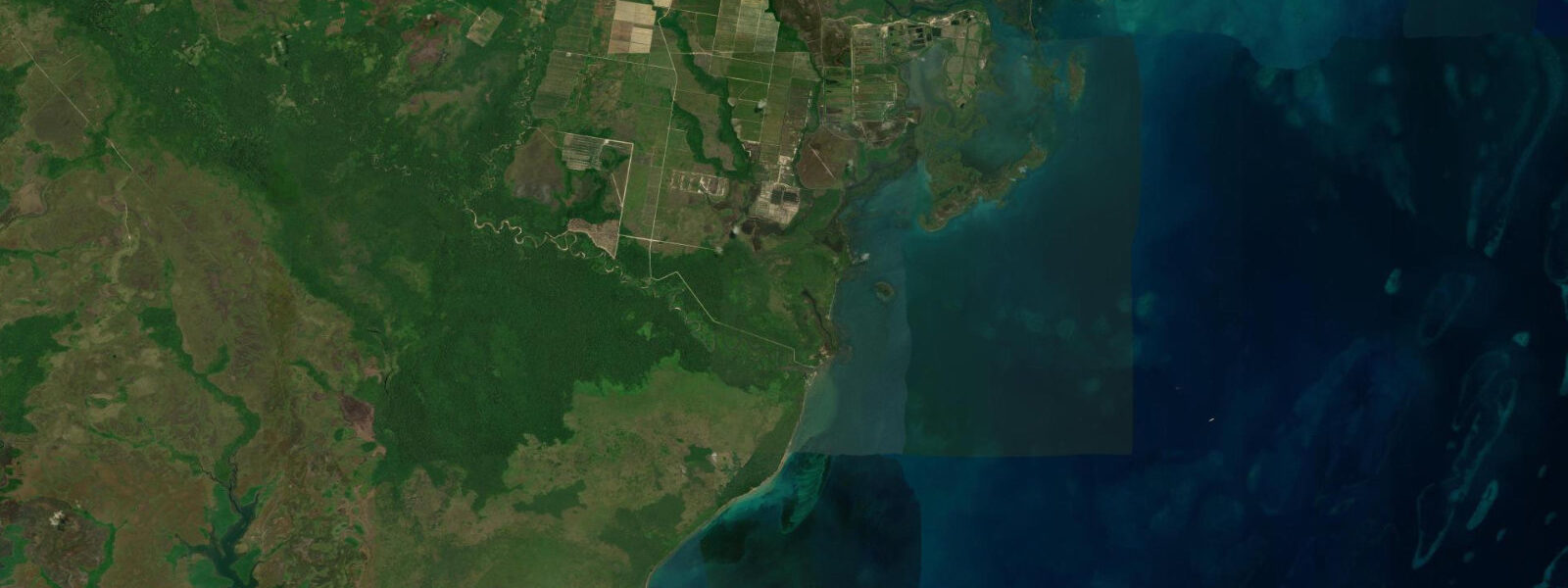
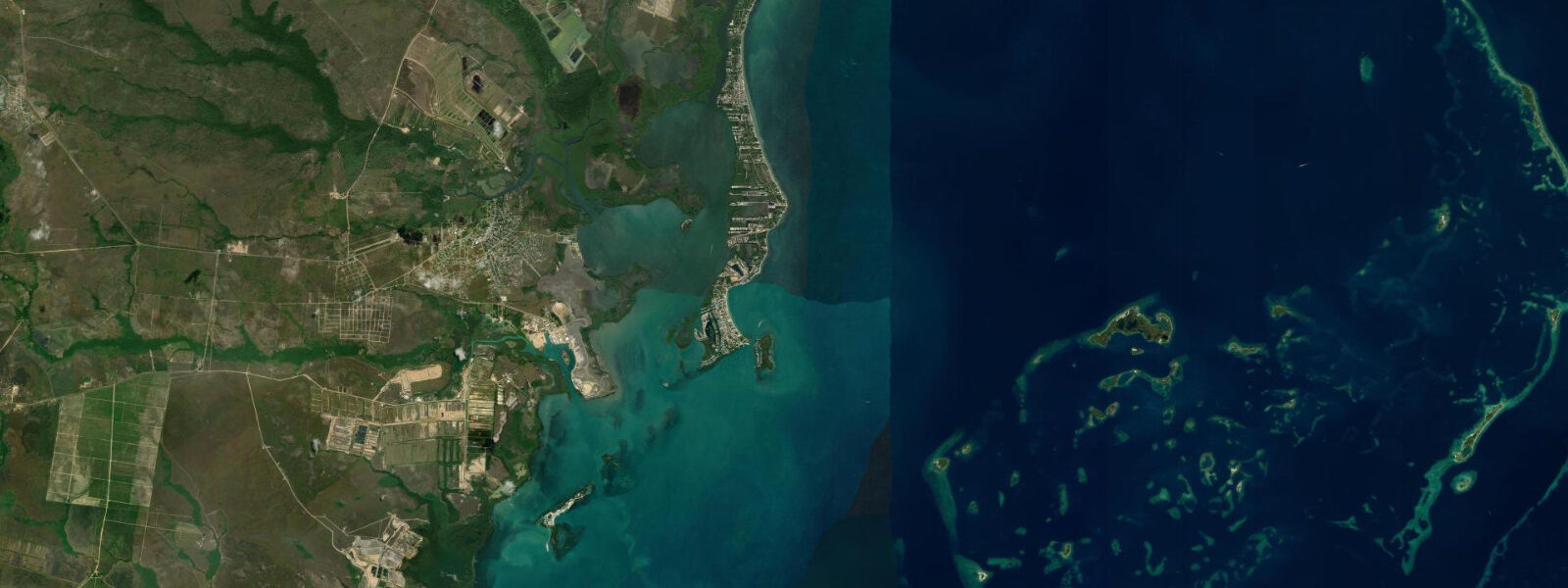
The three closest curated TideTurtle locations to Punta Gorda, Belize, measured by great-circle distance.
Today's solunar windows
Solunar tradition: major periods are the ≈3h windows around moon transit and opposition; minor are ≈2h around moonrise and moonset. Pair with the local tide stage and wind for the best read.
Cycle dates near Punta Gorda, Belize
Next spring tide on Sat 08 Aug (range 0.4m). Next neap on Wed 05 Aug.
Spring tides cluster around new and full moons (biggest swings). Neap tides land on quarter moons (smallest swings). See the spring tide and neap tide glossary entries for the why.
About tides at Punta Gorda, Belize
A short guide to the coastline at Punta Gorda, Belize — geography, sea state, and what the tide is actually doing under your feet.
Punta Gorda is the southernmost town in Belize, in the Toledo District at the foot of the Maya Mountains where the rivers run fast to the coast and the reef system fragments into scattered cayes and mangrove islands. It is a long way from anywhere — 8 hours by road from Belize City, or a short flight on a Tropic Air Cessna Caravan. That distance filters the visitor population; Punta Gorda draws travellers who have come specifically for the Toledo District jungle-coast junction rather than the Ambergris Caye beach-bar circuit.
The tidal regime here is Caribbean microtidal — spring range 0.3 to 0.5 metres, mixed semidiurnal — but with a modification that matters for estuary and bay planning: the rivers discharging into the bay lower salinity significantly during the May–November wet season and raise the bay water level during flood events. The Río Temash, the Río Sarstoon (on the Guatemalan border), and several smaller systems bring heavy sediment loads during peak rain. Bay clarity is low June–September; the dry-season window (December–April) is when offshore marine conditions are at their best.
Port Honduras Marine Reserve covers the waters north and east of Punta Gorda — a network of mangrove cays, seagrass beds, and patch reefs that shelters one of the most significant manatee populations in Central America. West Indian manatees feed on the seagrass in water 1 to 3 m deep; they are most reliably seen in the morning on calm days, often in pairs or small groups in the sheltered passages between the mangrove cays. The manatees here are largely undisturbed compared to the Florida population — approach regulations exist but enforcement is limited to the reserve ranger service. A slow kayak or paddled skiff in the early morning gives the best chance of encounter without disturbance.
The ferry to Puerto Barrios, Guatemala departs from Punta Gorda's main dock. The crossing takes 60 to 75 minutes across the Gulf of Honduras and connects to the Guatemalan Caribbean coast. The ferry schedule (typically one morning departure each way) is fixed and not tide-dependent; the gulf is open Caribbean with the same microtidal regime. Passport and customs formalities apply on both sides.
Garifuna culture is the defining human geography of the Punta Gorda area. The Garifuna, descendants of Carib and Arawak islanders and West African survivors from a 1675 shipwreck on St. Vincent, were exiled to the Central American coast by the British in 1797 and established their Caribbean coastal communities from Dangriga south through Punta Gorda to Livingston in Guatemala. The culture, music (punta rock), food (hudut, cassava bread), and fishing traditions are maintained actively in the Toledo District villages; Garifuna Settlement Day on 19 November is the primary public celebration.
Anglers find the Toledo District coast one of the most varied in Belize for species mix. Snook in the river mouths on the incoming tide; cubera snapper and permit on the reef structures in the marine reserve; tarpon in the channels between the mangrove cays year-round. The incoming tide window (first 3 hours from the predicted low) is the most productive for snook and permit in the reserve channels. Offshore, the shelf drops to the Guatemala Basin deep water within 20 km, and mahi-mahi and wahoo are present year-round.
Photographers in the Punta Gorda area work the mangrove cay reflections in early morning — the flat calm before the trade wind builds is the window for mirror-surface shots of the mangrove channels. The Garifuna village of Barranco, 40 km south on the coast near the Guatemalan border, has a photographic character that is largely unchanged from a generation ago.
Predictions on this page come from Open-Meteo Marine, a global gridded ocean model. Accuracy is ±45 minutes on timing and ±0.2 to 0.3 metres on height. River discharge during the wet season dominates bay water levels beyond what the tide prediction describes.
Tide questions about Punta Gorda, Belize
Quick answers to the most common questions about tide times, range, and water access at Punta Gorda, Belize.
When is the next high tide at Punta Gorda?
The predicted next high tide at Punta Gorda is shown at the top of this page in Central Standard Time (CST, UTC-6). Spring range is 0.3 to 0.5 metres. In the wet season (May–November), river discharge raises bay water levels well beyond the astronomical tidal range — the tide prediction is a partial picture in those months. Predictions come from Open-Meteo Marine (gridded, ±45 min / ±0.2–0.3 m).
How do you visit Port Honduras Marine Reserve?
Port Honduras Marine Reserve is accessed by small boat from Punta Gorda's dock. Guide operations in Punta Gorda offer half-day and full-day trips to the mangrove cays for manatee watching, snorkelling on the patch reefs, and bird observation. Kayaking the inner channels independently is possible with a rented kayak from town. The dry season (December–April) gives the best water clarity for reef snorkelling; manatees are present year-round.
Can you take a ferry from Punta Gorda to Guatemala?
Yes. A scheduled ferry runs from Punta Gorda dock to Puerto Barrios, Guatemala — typically one morning departure each way, crossing time 60–75 minutes. Fare is around BZD $35–40 one way. Passports and customs formalities apply. The ferry does not run on Sundays in some seasons. Confirm the current schedule with the Punta Gorda ferry operators or the Belize Tourism Board before planning the crossing.
When is the best season to visit Punta Gorda for marine activities?
December through April is the dry season — best water clarity for reef snorkelling and diving in Port Honduras Reserve, and the most reliable weather for offshore fishing. The wet season (May–November) brings higher river discharge, lower bay visibility, and rougher sea conditions during tropical systems. Manatees are present year-round in the reserve. Garifuna Settlement Day on 19 November falls in the wet season but draws visitors to the Toledo District regardless.
Is this safe to use for navigation?
No. TideTurtle is a planning tool, not a nautical almanac. Navigation in Port Honduras Marine Reserve, across the Gulf of Honduras to Guatemala, and along the southern Belize coast requires current charts. The mangrove cay network has shallow-water passages that shift with sediment load from the rivers. Open-Meteo Marine predictions are not a substitute for authoritative harmonic data for any vessel operation.
8-day tide table — Punta Gorda, Belize
Heights relative to MSL. Predictions: Open-Meteo Marine (MeteoFrance SMOC, 0.08° grid) — heights relative to MSL (not chart datum / LAT). Model-derived.
| Day | Type | Time | Height |
|---|---|---|---|
| Mon 03 Aug | High | 18:00 | 0.2m |
| Tue 04 Aug | Low | 07:45 | 0.0m |
| High | 16:00 | 0.2m | |
| Wed 05 Aug | Low | 09:00 | -0.0m |
| High | 16:50 | 0.3m | |
| Low | 20:55 | 0.1m | |
| High | 23:18 | 0.2m | |
| Thu 06 Aug | Low | 02:00 | 0.1m |
| High | 17:50 | 0.3m | |
| Fri 07 Aug | — | ||
| Sat 08 Aug | Low | 11:10 | -0.1m |
| High | 19:15 | 0.3m | |
| Low | 23:42 | 0.0m | |
| Sun 09 Aug | High | 06:54 | 0.2m |
| Low | 12:00 | -0.1m | |
| Mon 10 Aug | High | 07:10 | 0.2m |
| Low | 12:50 | -0.1m | |
| High | 17:00 | 0.1m | |