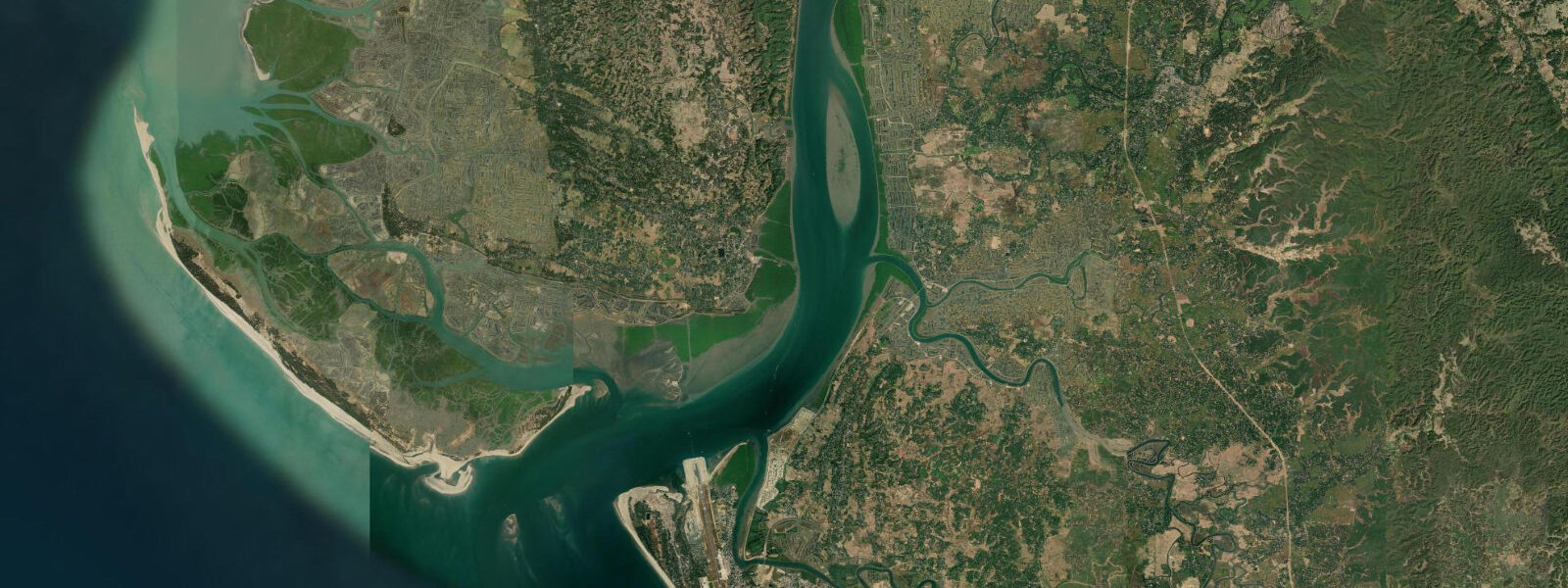
Cox's Bazar tide times
Cox's Bazar tide forecast — heights relative to MSL.
Today's tide times for Cox's Bazar
Tide times at Cox's Bazar on Tuesday, 4 August 2026: first low tide at 06:43am, first high tide at 12:50pm, second low tide at 07:02pm. Sunrise 05:26am, sunset 06:30pm.
Tide chart for Cox's Bazar
24-hour cosine-interpolated curve around the present moment. Heights relative to MSL. Predictions: Predictions: Open-Meteo Marine (MeteoFrance SMOC, 0.08° grid).
Sun, moon and conditions on Tue 04 Aug
Snapshot at build time — refreshes daily. Sea state from Open-Meteo Marine.
Highs and lows next 7 days
Every predicted high and low for the next week, with the daily tidal coefficient (0–120; higher = bigger swing, > 95 means stronger currents).
Other spots nearby
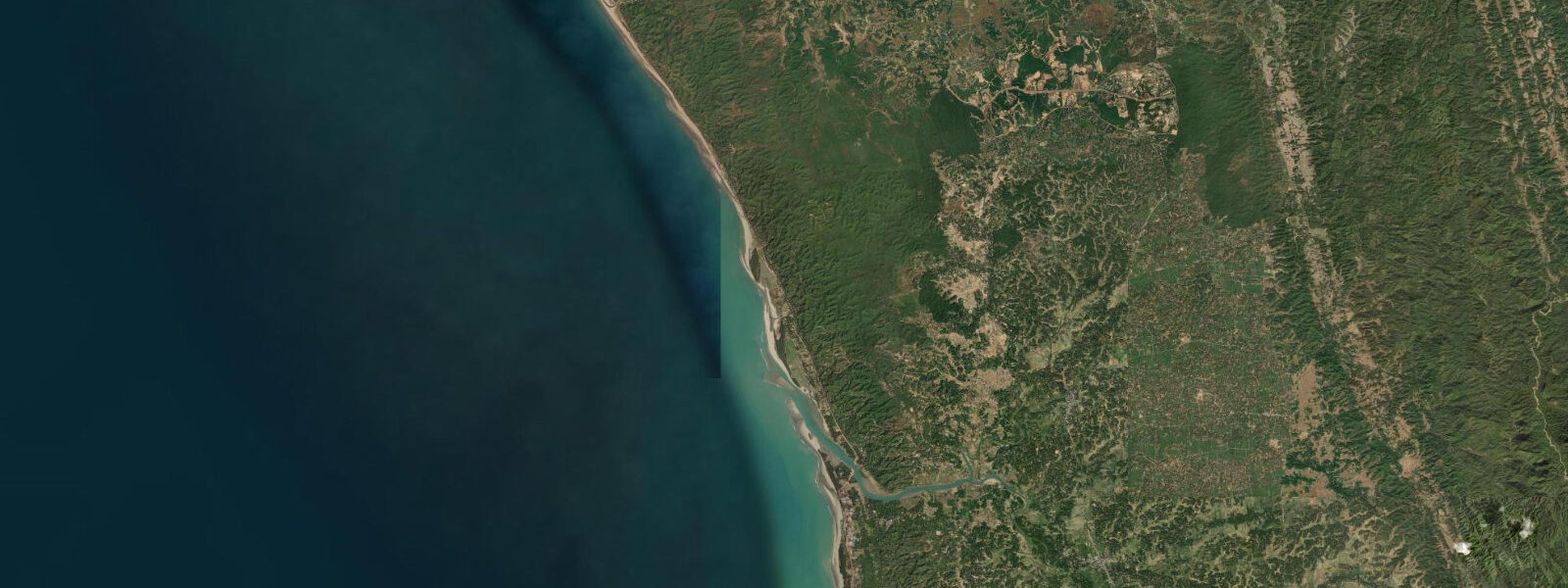
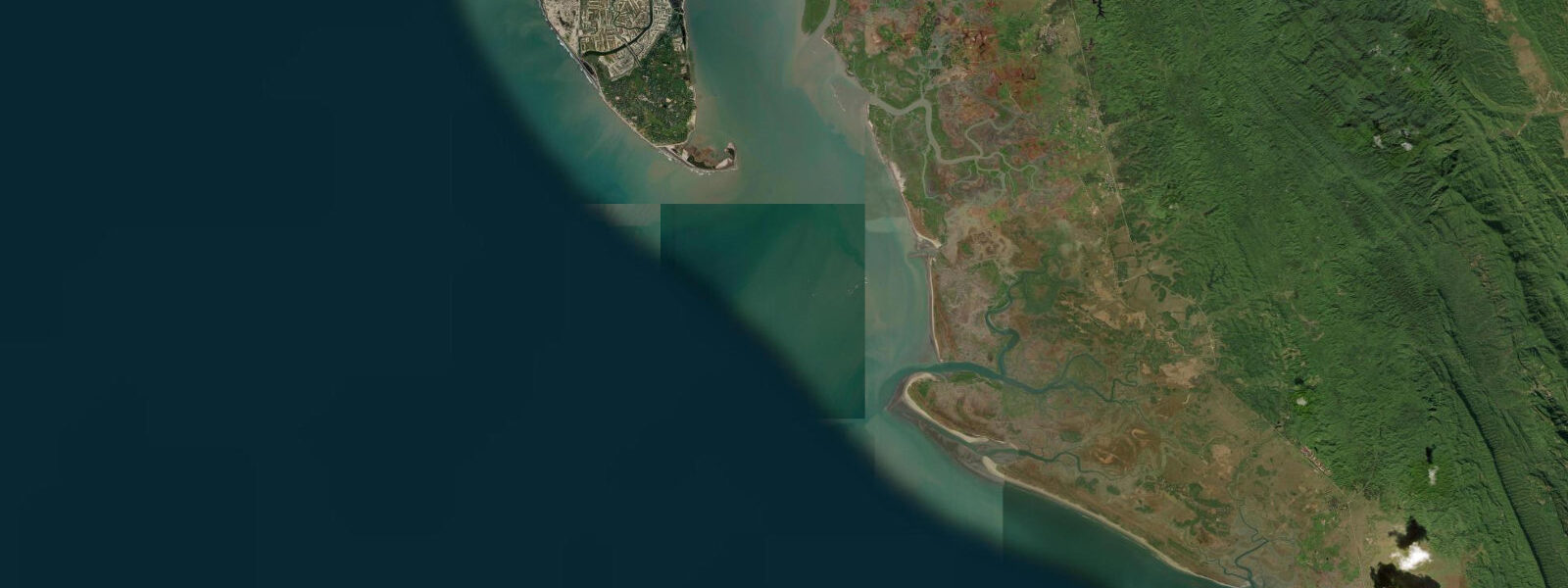
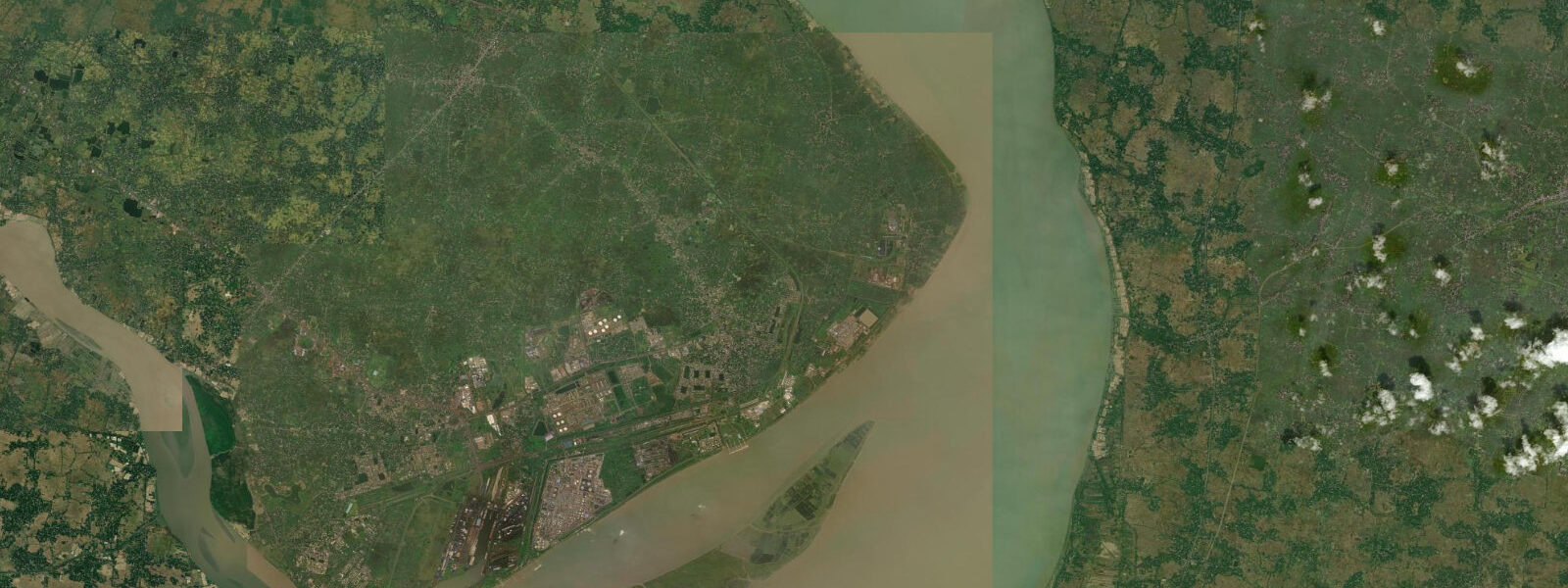
The three closest curated TideTurtle locations to Cox's Bazar, measured by great-circle distance.
Today's solunar windows
Solunar tradition: major periods are the ≈3h windows around moon transit and opposition; minor are ≈2h around moonrise and moonset. Pair with the local tide stage and wind for the best read.
Cycle dates near Cox's Bazar
Last spring tide on Tue 04 Aug (range 2.4m). Next spring tide on Mon 10 Aug (range 2.3m). Next neap on Sat 08 Aug.
Spring tides cluster around new and full moons (biggest swings). Neap tides land on quarter moons (smallest swings). See the spring tide and neap tide glossary entries for the why.
About tides at Cox's Bazar
A short guide to the coastline at Cox's Bazar — geography, sea state, and what the tide is actually doing under your feet.
Cox's Bazar is Bangladesh's primary domestic tourism destination and sits at the head of the world's longest unbroken natural sandy beach — a 120-kilometre continuous strand running south from Cox's Bazar town to Teknaf at the tip of the peninsula bordering Myanmar. The beach has no significant interruption: the drainage behind the beach ridge runs parallel rather than crossing it, no headlands divide it, and no significant reef system offshore breaks the Bay of Bengal fetch.
The tidal regime at Cox's Bazar is semidiurnal, with a large spring range of approximately 3.5 to 4.5 metres. The Bay of Bengal is a semi-enclosed sea whose basin geometry amplifies the tidal wave propagating northward from the Indian Ocean; by the time the tidal wave reaches the northern Bay of Bengal, it has been amplified substantially relative to its open-ocean amplitude. Spring tides expose the beach to its maximum width — 200 to 400 metres of wet sand at low water — and then cover it again over the following 6 hours. The beach at Cox's Bazar is fully functional as a beach only during the half of the tidal cycle that is below mid-tide; at high water springs, the water can reach the bamboo restaurant structures and shop fronts that line the upper beach in the most developed sections of the Laboni Beach area.
At low water springs — which occur twice daily in the early morning and early afternoon windows depending on the lunar phase — the exposed beach flat is extraordinary in its scale: 200 to 400 metres of wet, firm sand accessible for walking without the distraction of the tourism infrastructure higher up the beach. The flat is used by the fishing community for drying nets and hauling boats, by children playing cricket, and by beach-walkers who have discovered that low water is the moment to see the beach at its full extent. The horizon is wide and the firmness of the sand — wet and flat at low water — is better for walking than the soft, sloped upper beach.
Fishing is the original livelihood of the Cox's Bazar coastal community, before tourism reorientated the town's economy. Mechanised trawlers work the Bay of Bengal grounds in the dry season (November to April); small open boats and beach-launched nets target the inshore waters year-round. The harbour at Cox's Bazar, behind the beach's northern end near Fisherman's Wharf, handles the trawler fleet. The fish market at the harbour is active from dawn when the returning boats unload — hilsa (Tenualosa ilisha), the national fish of Bangladesh, is the most celebrated catch in season (July to November).
Cox's Bazar has developed rapidly as a domestic tourism destination, handling millions of visitors annually from Dhaka and Chittagong particularly during school holidays and dry-season weekends (November to March). The beach infrastructure is dense in the Laboni Beach area near the town centre and becomes progressively quieter moving south toward Inani and Teknaf. The south end of the beach, near Teknaf, is accessible only by local transport and has no large tourism infrastructure.
The hilsa fish season (July to November) and the beach-walking season (November to March) do not overlap neatly — the monsoon rains and rough Bay of Bengal sea conditions in July to October limit beach tourism. The driest and most comfortable months are November to February.
Predictions on this page come from Open-Meteo Marine, a gridded global ocean model. Accuracy is typically within plus or minus 45 minutes on timing and 0.2 to 0.3 metres on height — model-derived, not from a local gauge. The local tide authority is the Bangladesh Meteorological Department (BMD), which publishes tidal predictions for Cox's Bazar and other Bay of Bengal reference stations.
Tide questions about Cox's Bazar
Quick answers to the most common questions about tide times, range, and water access at Cox's Bazar.
What is the tidal range at Cox's Bazar?
Spring tidal range at Cox's Bazar is approximately 3.5 to 4.5 metres — a large range driven by the Bay of Bengal's semi-enclosed basin geometry, which amplifies the northward-propagating tidal wave. At low water springs, the beach exposes 200 to 400 metres of wet sand; at high water springs, the water reaches the upper beach in the most developed sections. The regime is semidiurnal — two high and two low waters per day. Predictions here come from Open-Meteo Marine (±45 minutes on timing, ±0.3 m on height). Not for navigation; consult the Bangladesh Meteorological Department (BMD) for reference station predictions.
How long is the Cox's Bazar beach?
The unbroken natural sandy beach from Cox's Bazar town south to Teknaf is approximately 120 kilometres — recognised as the world's longest continuous natural sandy beach. The beach has no river mouths crossing it (drainage runs behind the beach ridge), no headlands interrupting it, and no reef system breaking its fetch. The full length is accessible by road and local transport; the northern end near Cox's Bazar town is the most developed, with progressively quieter sections as you move south toward Inani and Teknaf. At low water springs, the beach width at its most exposed sections reaches 200 to 400 metres.
What is hilsa fish and when is the season at Cox's Bazar?
Hilsa (Tenualosa ilisha) is the national fish of Bangladesh — a large, bony, oily fish in the shad family that migrates from the Bay of Bengal into the Ganges-Brahmaputra river system to spawn. The hilsa is considered the finest table fish in Bangladesh and is culturally central to Bengali cuisine. The Cox's Bazar season runs July to November when migrating hilsa are caught in Bay of Bengal trawl and net fishery. This overlaps with monsoon season when beach conditions are poor; the hilsa is eaten in the town rather than at beach-front restaurants. Fresh hilsa is best grilled or steamed with mustard — the flesh is rich, strongly flavoured, and very bony.
When is the best time to visit Cox's Bazar?
The dry season (November to March) gives the most comfortable conditions: clear skies, low humidity, calm Bay of Bengal, and the largest number of domestic tourists (which means more activity but also more crowds). December and January are peak domestic tourism months. The monsoon season (June to September) brings heavy rain, rough seas, and beach closures in periods of cyclone threat. October and April to May are transitional months with mixed conditions. Hilsa fishing is at its peak in July to October, which may interest visitors who want to see the harbour fish market at its most active.
What is the best section of the Cox's Bazar beach to walk at low tide?
The Inani Beach section, 25 kilometres south of Cox's Bazar town, is quieter and less developed than the Laboni Beach area near town. At low water springs, the Inani sandflat exposes 300 to 400 metres of firm, walkable beach with rock formations at the southern end. The Laboni Beach area (central Cox's Bazar) is broader at low water but more crowded and commercially developed. The very southern end near Teknaf is the quietest but requires 2 to 3 hours of travel from the town. For an uncrowded low-tide walk with good beach width, Inani is the practical choice.
8-day tide table — Cox's Bazar
Heights relative to MSL. Predictions: Open-Meteo Marine (MeteoFrance SMOC, 0.08° grid) — heights relative to MSL (not chart datum / LAT). Model-derived.
| Day | Type | Time | Height |
|---|---|---|---|
| Tue 04 Aug | Low | 06:43 | -0.2m |
| High | 12:50 | 2.0m | |
| Low | 19:02 | -0.4m | |
| Wed 05 Aug | High | 01:27 | 2.0m |
| Low | 19:46 | -0.2m | |
| Thu 06 Aug | High | 02:17 | 1.8m |
| Low | 20:45 | -0.0m | |
| Fri 07 Aug | High | 03:18 | 1.7m |
| Low | 09:40 | 0.3m | |
| High | 15:38 | 1.4m | |
| Low | 22:01 | 0.1m | |
| Sat 08 Aug | High | 04:54 | 1.7m |
| Low | 11:05 | 0.4m | |
| High | 17:25 | 1.3m | |
| Sun 09 Aug | Low | 12:33 | 0.3m |
| High | 18:54 | 1.5m | |
| Mon 10 Aug | Low | 00:45 | -0.0m |
| High | 07:39 | 2.1m | |
| Low | 13:41 | 0.0m | |
| High | 19:57 | 1.8m | |
| Tue 11 Aug | Low | 01:46 | -0.2m |
| High | 05:00 | 0.9m |