Exmouth tide times
Exmouth tide forecast — heights relative to MSL.
Today's tide times for Exmouth
Tide times at Exmouth on Monday, 3 August 2026: first low tide at 10:00, first high tide at 15:18, second low tide at 21:32. Sunrise 08:55, sunset 20:04.
Tide chart for Exmouth
24-hour cosine-interpolated curve around the present moment. Heights relative to MSL. Predictions: Predictions: Open-Meteo Marine (MeteoFrance SMOC, 0.08° grid).
Sun, moon and conditions on Mon 03 Aug
Snapshot at build time — refreshes daily. Sea state from Open-Meteo Marine.
Highs and lows next 7 days
Every predicted high and low for the next week, with the daily tidal coefficient (0–120; higher = bigger swing, > 95 means stronger currents).
Other spots nearby
The three closest curated TideTurtle locations to Exmouth, measured by great-circle distance.
Today's solunar windows
Solunar tradition: major periods are the ≈3h windows around moon transit and opposition; minor are ≈2h around moonrise and moonset. Pair with the local tide stage and wind for the best read.
Cycle dates near Exmouth
Last spring tide on Mon 03 Aug (range 1.7m). Next neap on Sat 08 Aug.
Spring tides cluster around new and full moons (biggest swings). Neap tides land on quarter moons (smallest swings). See the spring tide and neap tide glossary entries for the why.
About tides at Exmouth
A short guide to the coastline at Exmouth — geography, sea state, and what the tide is actually doing under your feet.
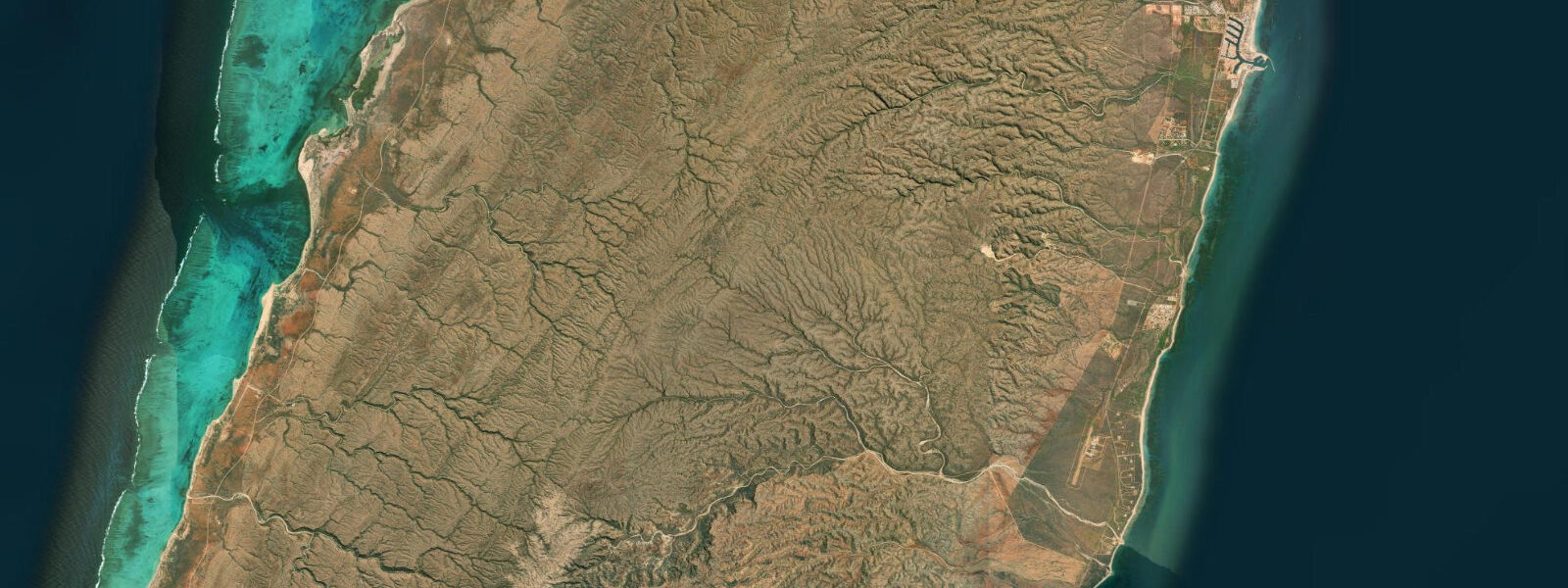
Exmouth is at the tip of the North West Cape peninsula, on the edge of Ningaloo Reef — 300 kilometres of fringing coral reef that is the world's largest fringing reef accessible directly from shore. Unlike the Great Barrier Reef, Ningaloo Reef is within swimming distance of the beach for much of its length. Tidal pattern is semidiurnal with a range of about 1.0 to 1.4 metres; the tidal flush through the lagoon between the reef and the shore creates the clear, warm water that makes snorkelling and diving here exceptional.
Whale sharks visit Ningaloo Reef from March through July, following the mass coral spawning event that triggers the food chain supporting them. The whale shark interaction season at Ningaloo is the most reliable in the world — spotter aircraft locate whale sharks daily and radio their position to licensed swim operators. Participants enter the water from the zodiac ahead of the approaching shark and drift alongside it. This is snorkelling only (no scuba around whale sharks), and the experience of swimming with the world's largest fish (up to 12 metres in length) is unreplicable.
Manta rays are present year-round but most visible from May through October when they congregate in the Ningaloo Marine Park's Manta Bommie. Snorkelling with manta rays is a standard offering from Exmouth dive operators — the rays visit cleaning stations predictably and divers/snorkellers can observe the cleaning behaviour at close range.
Some of the most accessible shore snorkelling on Ningaloo is at Turquoise Bay (50 km south of Exmouth in Cape Range National Park). The bay has a drift snorkel where the tidal current carries you parallel to the reef in 2 to 5 metres of water — parrotfish, surgeonfish, reef sharks, turtles, and hundreds of reef fish without a boat trip. The drift starts at a specific entry point and exits at a beach 200 metres down-current — time this with the incoming tide for the full drift experience.
Humpback whales pass north (July through September) and south (October through November) through Ningaloo. Whale watching boats run during both migrations. Loggerhead, hawksbill, and green turtles nest on the cape beaches from November through March.
Predictions on this page come from Open-Meteo Marine, a gridded global ocean model. Accuracy is typically within plus or minus 45 minutes on timing and 0.2 to 0.3 metres on height — model-derived, not from a local gauge. For authoritative Australian tide data, consult the Australian Bureau of Meteorology at bom.gov.au.
Tide questions about Exmouth
Quick answers to the most common questions about tide times, range, and water access at Exmouth.
When can I swim with whale sharks at Ningaloo?
Whale shark season at Ningaloo runs March through July, peaking April through June. The season starts after the mass coral spawning event that fuels the food chain supporting whale sharks. Spotter aircraft locate whale sharks daily during the season; licensed swim operators provide guaranteed interactions (refunds if no whale sharks are found on your trip). Book well ahead — this is one of the most popular wildlife experiences in Australia. Not bookable with less than 4 to 6 weeks notice in peak season.
How do I do the Turquoise Bay drift snorkel?
Turquoise Bay is 50 km south of Exmouth in Cape Range National Park. Park at the south end of the bay, walk to the marked snorkel entry point on the north side of the bay, enter the water, and drift south with the tidal current past the reef. Exit at the south beach. The drift takes about 20 to 30 minutes and covers 200 metres; you'll see parrotfish, turtles, reef sharks, and hundreds of reef fish in 2 to 5 metres of water. Best on an incoming tide — the current is strongest and the fish most active. A reef snorkel set and reef shoes are recommended.
What is the tidal range at Exmouth and Ningaloo Reef?
Tidal range at Exmouth is 1.0 to 1.4 metres on springs. The tidal flush through the Ningaloo lagoon (the zone between the fringing reef and the shore) is what creates the clear, warm water — the exchange brings oceanic water into the lagoon twice daily. The reef crest is exposed or very shallow at low water; the best snorkelling access over the reef top is at mid to high tide when enough water covers the coral without the surge of a full high tide.
Can I see manta rays year-round at Exmouth?
Manta rays (Manta alfredi) are resident in the Ningaloo Marine Park year-round, with higher concentrations from May through October. The Manta Bommie cleaning station (an underwater pinnacle) is visited by rays with regularity; dive operators run manta snorkel trips specifically to this site. The rays come to have parasites removed by smaller cleaner fish — the cleaning behaviour means they hover in place, making extended observation possible. A manta snorkel trip typically provides 15 to 30 minutes of sustained manta time.
Where do turtles nest near Exmouth?
Loggerhead, hawksbill, and green turtles nest on the beaches of North West Cape from November through March. The main nesting beaches are on the west (Ningaloo) side of the peninsula in Cape Range National Park. Night tours to observe nesting turtles (laying season) and hatchling emergence are run by licensed Ningaloo turtle program operators — check with the Exmouth visitor centre for current season operators. Approaching nesting turtles independently is prohibited; join a licensed tour.
8-day tide table — Exmouth
Heights relative to MSL. Predictions: Open-Meteo Marine (MeteoFrance SMOC, 0.08° grid) — heights relative to MSL (not chart datum / LAT). Model-derived.
| Day | Type | Time | Height |
|---|---|---|---|
| Mon 03 Aug | Low | 10:00 | -0.2m |
| High | 15:18 | 1.3m | |
| Low | 21:32 | -0.4m | |
| Tue 04 Aug | High | 03:38 | 1.4m |
| Low | 09:55 | -0.2m | |
| High | 15:48 | 1.2m | |
| Low | 21:58 | -0.2m | |
| Wed 05 Aug | High | 04:02 | 1.4m |
| Low | 22:18 | -0.1m | |
| Thu 06 Aug | High | 04:26 | 1.3m |
| Low | 11:14 | -0.2m | |
| High | 16:55 | 0.8m | |
| Low | 22:40 | -0.0m | |
| Fri 07 Aug | High | 05:02 | 1.3m |
| Low | 12:08 | -0.1m | |
| High | 17:45 | 0.6m | |
| Low | 23:10 | 0.1m | |
| Sat 08 Aug | High | 05:42 | 1.1m |
| Low | 13:23 | -0.1m | |
| High | 19:15 | 0.4m | |
| Low | 23:42 | 0.2m | |
| Sun 09 Aug | High | 07:04 | 0.9m |
| Low | 15:21 | -0.1m | |
| Mon 10 Aug | High | 09:00 | 1.0m |