Cairns tide times
Cairns tide forecast — heights relative to MSL.
Today's tide times for Cairns
Tide times at Cairns on Monday, 3 August 2026: first low tide at 10:00, first high tide at 23:15. Sunrise 06:41, sunset 18:04.
Tide chart for Cairns
24-hour cosine-interpolated curve around the present moment. Heights relative to MSL. Predictions: Predictions: Open-Meteo Marine (MeteoFrance SMOC, 0.08° grid).
Sun, moon and conditions on Mon 03 Aug
Snapshot at build time — refreshes daily. Sea state from Open-Meteo Marine.
Highs and lows next 7 days
Every predicted high and low for the next week, with the daily tidal coefficient (0–120; higher = bigger swing, > 95 means stronger currents).
Other spots nearby
The three closest curated TideTurtle locations to Cairns, measured by great-circle distance.
Today's solunar windows
Solunar tradition: major periods are the ≈3h windows around moon transit and opposition; minor are ≈2h around moonrise and moonset. Pair with the local tide stage and wind for the best read.
Cycle dates near Cairns
Next spring tide on Sun 09 Aug (range 2.4m). Next neap on Wed 05 Aug.
Spring tides cluster around new and full moons (biggest swings). Neap tides land on quarter moons (smallest swings). See the spring tide and neap tide glossary entries for the why.
About tides at Cairns
A short guide to the coastline at Cairns — geography, sea state, and what the tide is actually doing under your feet.
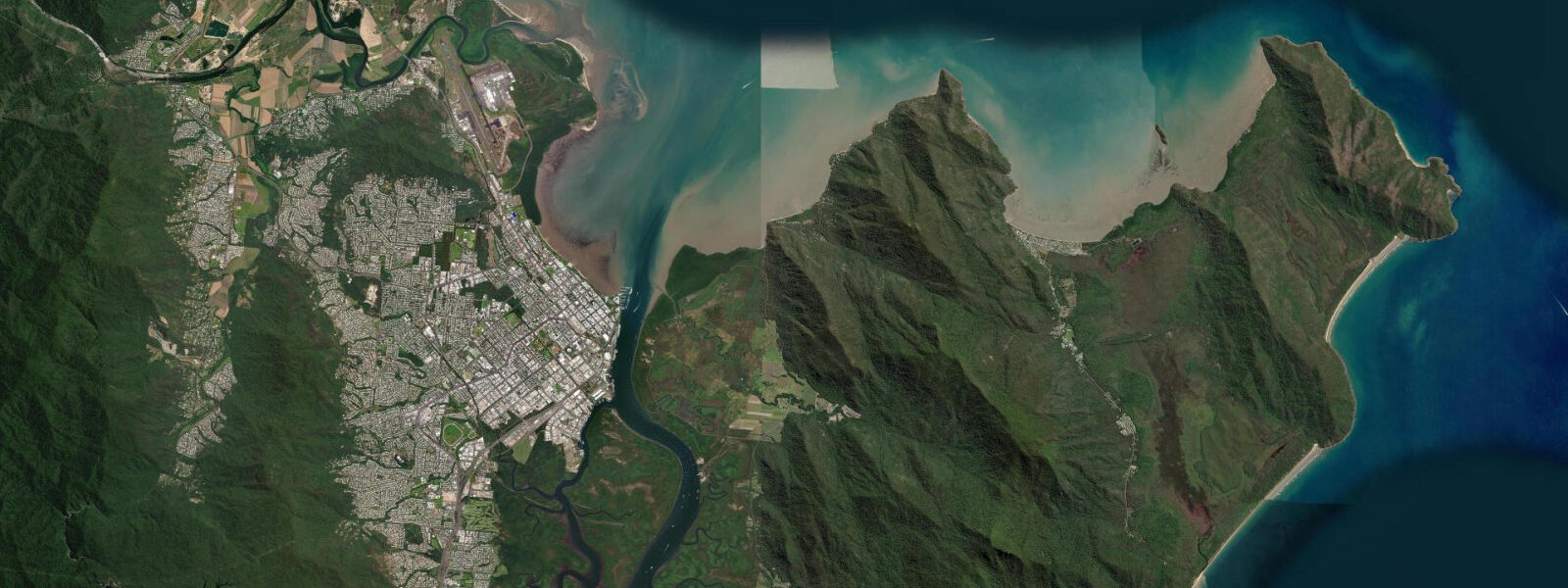
Cairns is the gateway to the Great Barrier Reef on the north Queensland coast, where the Coral Sea meets the rainforest-covered ranges of the Atherton Tablelands at the sea edge. The tidal pattern here is semidiurnal with a substantial range: mean spring range around 2.8 metres, with springs sometimes exceeding 3.4 m. The tidal flats in front of the city centre are extensive — at low water, several hundred metres of mud and mangrove fringe is exposed, with the Cairns Esplanade running above it.
The Great Barrier Reef is the main reason to base in Cairns. Day boats depart from the Reef Fleet Terminal every morning, reaching the outer reef in 90 minutes to 2 hours. Snorkelling and diving on the outer reef is in 8 to 25 metres of clear water with visibility regularly exceeding 20 metres. The tidal cycle affects dive planning on the reef: current on the outer reef can run 1.5 knots on spring tides, and timing dives for the first slack of the day (often 2 hours after high water at the outer reef) gives the most comfortable conditions.
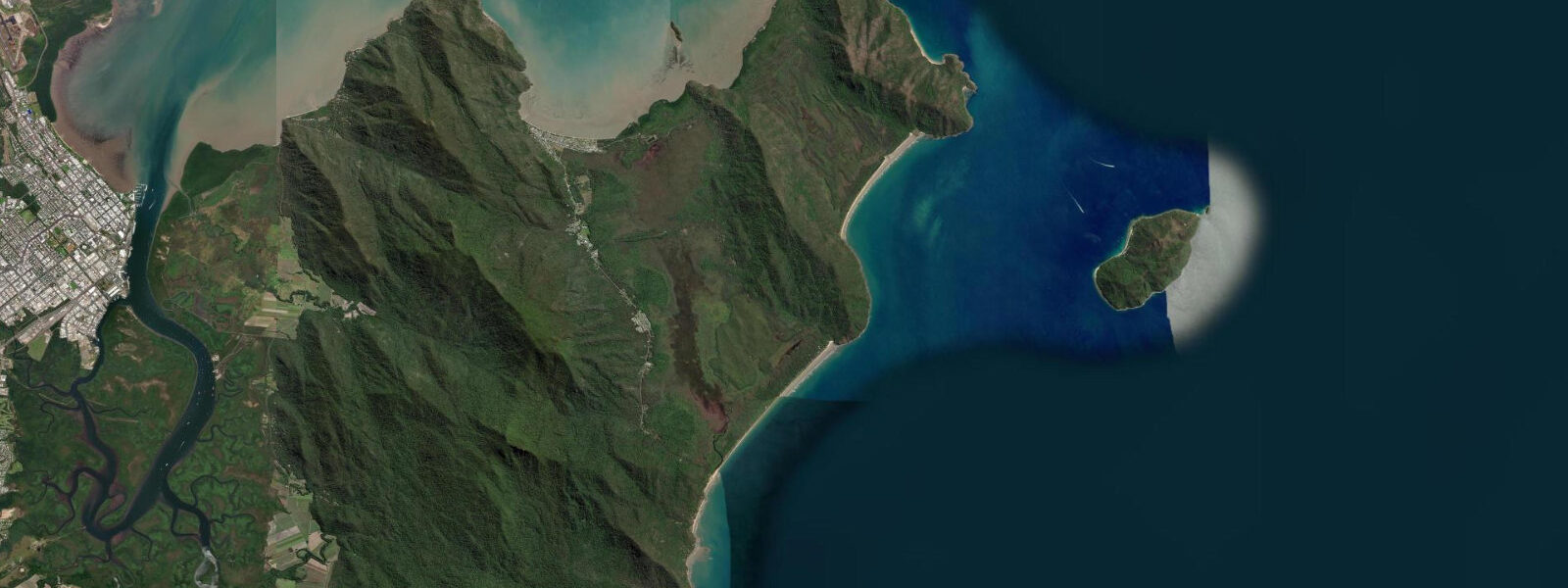
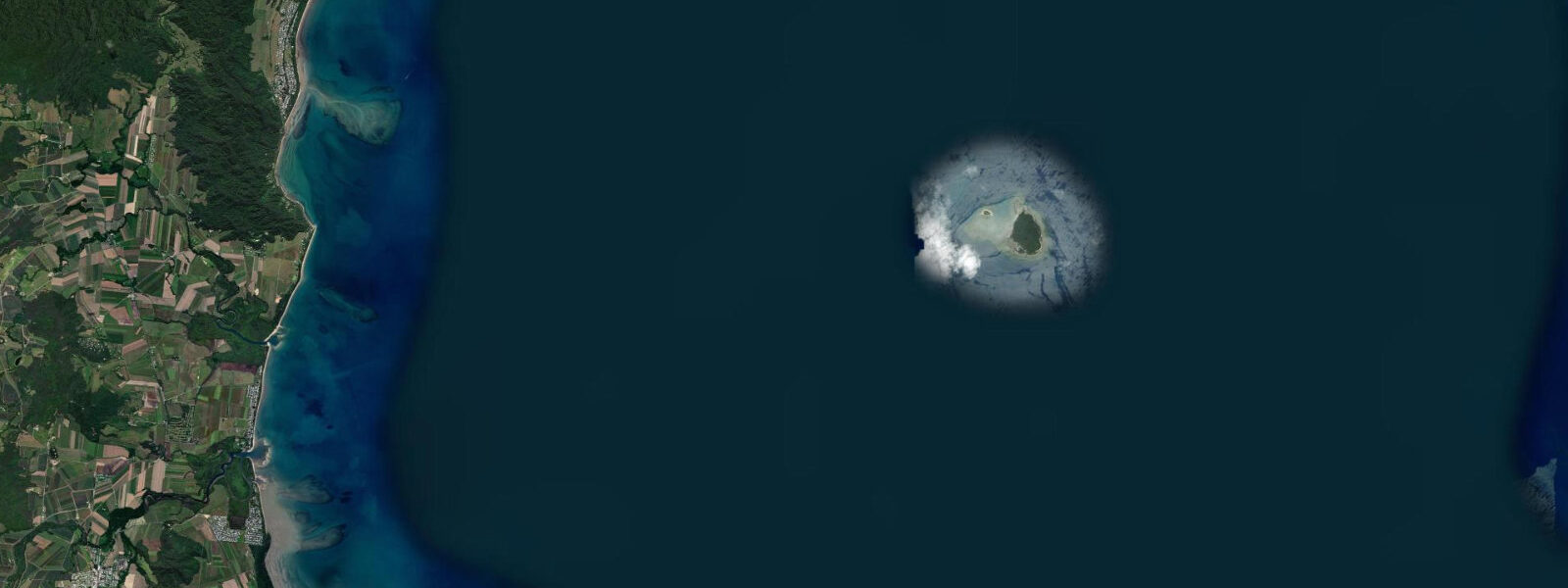
The inner reef (Green Island, Fitzroy Island) is closer — 45 minutes by fast catamaran — and better for beginners and families. The lagoon behind Green Island's fringing reef is calm at almost any tidal state. Fitzroy Island has walking tracks and good snorkelling off the rocks at low water when the fringing reef is shallowest.
For shore-based activities, the Cairns Esplanade lagoon (a purpose-built seawater pool at the northern end of the esplanade) provides safe swimming without jellyfish risk. Box jellyfish (Chironex fleckeri) and Irukandji jellyfish make ocean swimming dangerous from October through May without a full-body lycra suit. The Esplanade lagoon is the safe daytime swimming option during stinger season.
Fishing offshore from Cairns targets black marlin in the Coral Sea (September through December) — this stretch of the outer Barrier Reef is one of the premier big-game fishing grounds in the world. The 1000 lb marlin mark is achieved regularly here. Coral trout, red emperor, and mackerel are taken on the reef structures on smaller day boats.
Predictions on this page come from Open-Meteo Marine, a gridded global ocean model. Accuracy is typically within plus or minus 45 minutes on timing and 0.2 to 0.3 metres on height — model-derived, not from a local gauge. For authoritative Australian tide data, consult the Australian Bureau of Meteorology tide predictions at bom.gov.au.
Tide questions about Cairns
Quick answers to the most common questions about tide times, range, and water access at Cairns.
What is the tidal range at Cairns?
Cairns has semidiurnal tides with a mean spring range of about 2.8 metres, sometimes exceeding 3.4 m at the highest spring tides. The large range means the esplanade foreshore transforms completely — at low spring tide, extensive mud flats are exposed in front of the city. Tidal current on the outer Great Barrier Reef can run 1.5 knots; timing dive trips around slack water is recommended by most operators.
Is it safe to swim in the ocean at Cairns?
Not without protection from October through May — box jellyfish (Chironex fleckeri) and the smaller, nearly invisible Irukandji jellyfish make open ocean swimming dangerous during the wet season stinger period. The Cairns Esplanade Lagoon (a purpose-built seawater pool) is the safe swimming option during stinger season. Outside stinger season (June through September) the ocean beaches are generally safe. Surf beaches south of Cairns (Mission Beach area) are patrolled and have stinger nets in season.
When is the best time to dive the Great Barrier Reef from Cairns?
June through October is the peak diving season: dry season means lower rainfall, better visibility (20 to 30+ metres on the outer reef), and calmer sea conditions. Water temperature is 24 to 26°C — comfortable in a 3mm wetsuit or rash guard. November through April is the wet season with more variable visibility (10 to 20 m) and occasional rough conditions, but the reef is less crowded and some marine species (including whale sharks near the ribbon reefs) are more reliably encountered.
Can I see black marlin near Cairns?
Yes — the stretch of outer Barrier Reef between Cairns and Lizard Island is one of the world's premier black marlin fisheries. The season runs September through December, when giant black marlin (500 to 1000+ kg) concentrate on the reef edge to spawn. Cairns-based game fishing fleets specifically target these fish using live bait on the outer reef. Catch-and-release is strongly encouraged for large marlin; most operators require it. Charter rates are substantial — this is a specialist pursuit.
How do I get to the outer Great Barrier Reef from Cairns?
Several operators run fast catamarans from the Reef Fleet Terminal to outer reef pontoons — journey time 90 minutes to 2 hours. The main destinations are Agincourt Reef, Norman Reef, and Flynn Reef. Most day trips include snorkelling, guided scuba dives, and a glass-bottom boat tour at the reef pontoon. Booking ahead is strongly recommended in June through August when the reef is fully booked. Budget approximately A$200 to A$300 per adult for a full-day outer reef trip.
8-day tide table — Cairns
Heights relative to MSL. Predictions: Open-Meteo Marine (MeteoFrance SMOC, 0.08° grid) — heights relative to MSL (not chart datum / LAT). Model-derived.
| Day | Type | Time | Height |
|---|---|---|---|
| Mon 03 Aug | Low | 10:00 | 0.8m |
| High | 23:15 | 1.3m | |
| Tue 04 Aug | Low | 06:22 | 0.2m |
| High | 12:45 | 0.9m | |
| Low | 17:20 | 0.5m | |
| High | 23:50 | 1.1m | |
| Wed 05 Aug | Low | 07:36 | 0.2m |
| High | 14:40 | 1.0m | |
| Low | 20:18 | 0.7m | |
| Thu 06 Aug | High | 01:10 | 0.9m |
| Low | 08:54 | 0.1m | |
| High | 16:23 | 1.2m | |
| Fri 07 Aug | Low | 10:02 | -0.1m |
| High | 17:16 | 1.4m | |
| Low | 23:50 | 0.4m | |
| Sat 08 Aug | High | 04:38 | 0.9m |
| Low | 10:58 | -0.3m | |
| High | 18:05 | 1.7m | |
| Sun 09 Aug | Low | 11:47 | -0.5m |
| High | 18:43 | 1.9m | |
| Mon 10 Aug | Low | 01:08 | 0.0m |
| High | 06:18 | 1.1m | |
| Low | 09:00 | 0.4m |