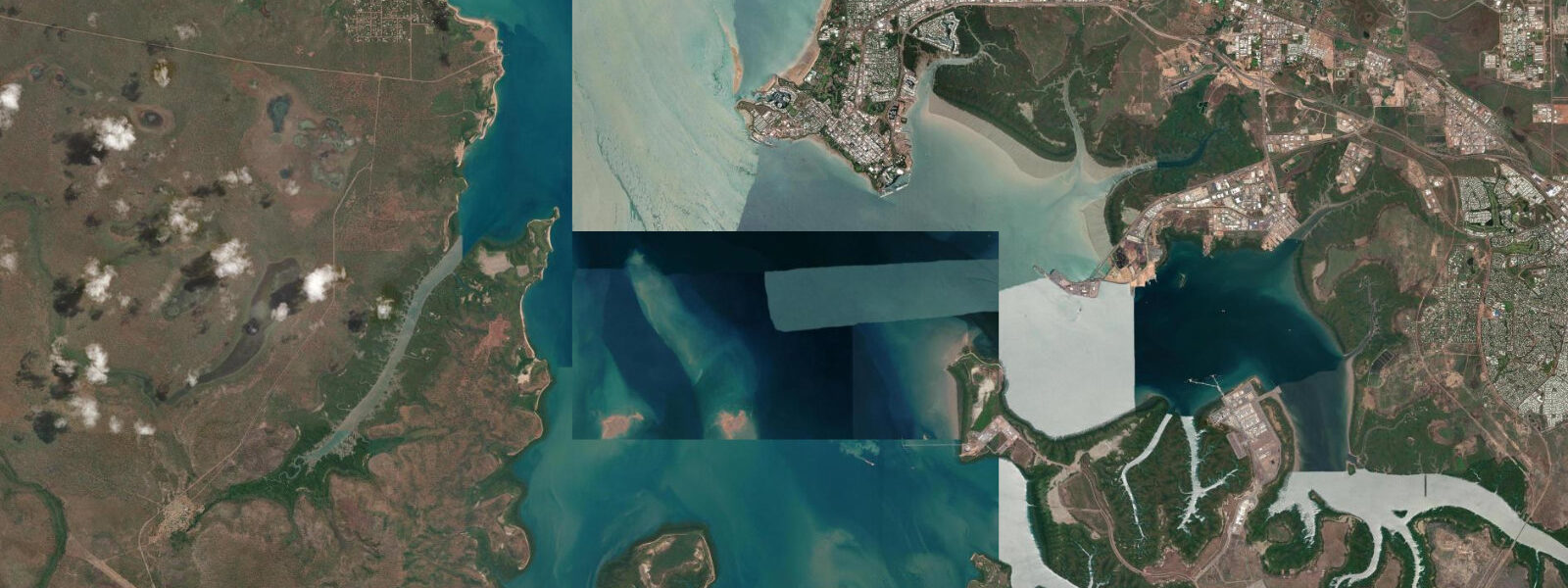
Darwin tide times
Darwin tide forecast — heights relative to MSL.
Today's tide times for Darwin
Tide times at Darwin on Tuesday, 4 August 2026: first high tide at 10:00, first low tide at 15:43, second high tide at 21:35. Sunrise 07:35, sunset 19:10.
Tide chart for Darwin
24-hour cosine-interpolated curve around the present moment. Heights relative to MSL. Predictions: Predictions: Open-Meteo Marine (MeteoFrance SMOC, 0.08° grid).
Sun, moon and conditions on Tue 04 Aug
Snapshot at build time — refreshes daily. Sea state from Open-Meteo Marine.
Highs and lows next 7 days
Every predicted high and low for the next week, with the daily tidal coefficient (0–120; higher = bigger swing, > 95 means stronger currents).
Other spots nearby
The three closest curated TideTurtle locations to Darwin, measured by great-circle distance.
Today's solunar windows
Solunar tradition: major periods are the ≈3h windows around moon transit and opposition; minor are ≈2h around moonrise and moonset. Pair with the local tide stage and wind for the best read.
Cycle dates near Darwin
Last spring tide on Tue 04 Aug (range 4.8m). Next spring tide on Mon 10 Aug (range 4.9m). Next neap on Sat 08 Aug.
Spring tides cluster around new and full moons (biggest swings). Neap tides land on quarter moons (smallest swings). See the spring tide and neap tide glossary entries for the why.
About tides at Darwin
A short guide to the coastline at Darwin — geography, sea state, and what the tide is actually doing under your feet.
Darwin sits at the top of the Northern Territory on a harbour that experiences one of the largest tidal ranges in Australia. Spring tides regularly reach 7.8 m above Chart Datum, and the ebb drains Frances Bay and the inner harbour with enough force to expose more than a kilometre of mudflat along the Darwin Esplanade. That same flat is a productive feeding ground for migratory shorebirds — red-necked stints, bar-tailed godwits, and great knots arrive from September onwards, working the soft substrate as the tide drops.
The tidal pattern is semidiurnal with strong diurnal inequality. On a day with mixed tides, one of the two high waters can be a full 2 m higher than the other. Boaters launching from Cullen Bay Marina or Stokes Hill Wharf read the tide carefully: the marina lock gates operate on a tidal schedule, and the boat ramp at East Point becomes mud at lower low waters. Plan a 2-hour window before and after high water for comfortable small-boat access in the shallow arms of the harbour.
Darwin Esplanade's rock shelf and the pools below Bicentennial Park are exposed for 90 minutes either side of low water on spring tides. These pools hold mud skippers, small crabs, mantis shrimp, and occasional reef fish caught by the retreating water. Photography is best at low water on a clear morning before the heat builds.
Barramundi fishing from the Darwin Wharf Precinct and off the Cullen Bay breakwater is tide-sensitive. Incoming tides push baitfish into the harbour, and barra follow. The run-in on a rising spring tide, particularly in the late dry season (August–October), is when locals set up. Mud crabbing in the mangrove creeks off Casuarina Drive and around Lee Point is also tidal: bait the trap on the incoming tide and pull it within two hours of high water before the current reverses and rolls the traps.
All coastal and estuarine waters around Darwin are saltwater crocodile habitat. This is not a precaution or a warning sign to ignore — it is a consistent, documented reality. Saltwater crocodiles inhabit the harbour, all mangrove creeks, and the beaches from East Point to Lee Point. Casuarina Beach has a designated swimming area with regular crocodile monitoring, and it operates under a seasonal safety protocol managed by the Northern Territory Government. Outside that designated zone, the beaches, estuaries, and mangrove edges are not managed swimming areas. Access them for fishing, photography, and boat-based activities with awareness of where you are standing and what is in the water. Never clean fish at the water's edge, never wade where you cannot see the bottom, and keep children and dogs away from the waterline in unmanaged areas.
Mindil Beach faces west and the Darwin Harbour beyond it. At high water in the dry season, the sunset from Mindil is framed by mangrove silhouettes and returning fishing boats. The Mindil Beach Sunset Market (Thursday and Sunday evenings, dry season only) draws the whole city. But at low water, the same beach becomes a broad mudflat dropping into the harbour — which is why the swimming zone there is small and closely watched.
WWII history layers over the tidal landscape. The Japanese bombing raids of 19 February 1942 sank ships in the harbour, some of which are now dive sites accessible at high water by boat. The WWII Oil Storage Tunnels near the waterfront were built into the hillside to protect fuel from further attack. The tidal waterfront that tourists walk today is the same shoreline that defence personnel watched for incoming aircraft in 1942.
Tidal predictions here use the Open-Meteo Marine gridded model (±45 minutes on timing, ±0.3 m on height). Not for navigation.
Tide questions about Darwin
Quick answers to the most common questions about tide times, range, and water access at Darwin.
What is the tidal range in Darwin and why is it so large?
Darwin's spring tidal range reaches approximately 7.8 m above Chart Datum, placing it among the largest in Australia. The range is amplified by the geometry of the Timor Sea shelf and the shape of Darwin Harbour, which funnel tidal energy into a relatively confined basin. The tides are semidiurnal with pronounced diurnal inequality — the two daily highs and two lows often differ significantly in height. Neap tides reduce the range to around 3–4 m, but the harbour still drains substantially on every ebb.
Is it safe to swim at Darwin beaches?
Casuarina Beach has a designated swimming area with regular crocodile monitoring and is the main managed ocean swimming site near Darwin. Outside that zone, all coastal and estuarine waters around Darwin are active saltwater crocodile habitat, and swimming is not recommended. Stinger (jellyfish) season runs through the wet season (November–April), further limiting safe swimming opportunities at unmanaged beaches. Always check current conditions and crocodile monitoring status with the NT Government before entering the water anywhere other than the designated Casuarina zone.
When is the best time to fish for barramundi off Darwin?
The late dry season (August–October) is peak barramundi season around Darwin. Incoming spring tides, particularly the run-in two hours before high water, concentrate bait and trigger feeding activity in the harbour channels and mangrove edges. The Darwin Wharf Precinct and Cullen Bay breakwater are accessible land-based spots that produce results without a boat. Boat anglers target the mangrove creek mouths on the rising tide, working the transition zone where fresh creek water meets tidal saltwater. Barramundi fishing requires a Northern Territory recreational fishing licence, available online.
What is exposed at low tide on the Darwin Esplanade?
On spring low tides, the rock shelf and tidal pools below the Darwin Esplanade and Bicentennial Park are exposed for roughly 90 minutes either side of low water. The exposed area can extend more than a kilometre from the normal waterline, revealing mud skippers, fiddler crabs, mangrove oysters, and occasionally small reef fish. This is productive territory for intertidal photographers and birdwatchers. Exercise caution near the water's edge — saltwater crocodiles can and do enter shallow tidal areas, including rock shelves adjacent to mangroves.
How do the Cullen Bay Marina lock gates work?
Cullen Bay Marina uses a tidal lock gate system to maintain a stable water level inside the marina basin, protecting vessels from the extreme tidal range in the outer harbour. The lock operates on a schedule tied to the tidal cycle, allowing boats to pass in and out within defined windows around high water. Boaters need to check the daily lock schedule before departure and return — missing the window means waiting for the next opening. The schedule is published by the marina and updated for each tidal day.
8-day tide table — Darwin
Heights relative to MSL. Predictions: Open-Meteo Marine (MeteoFrance SMOC, 0.08° grid) — heights relative to MSL (not chart datum / LAT). Model-derived.
| Day | Type | Time | Height |
|---|---|---|---|
| Tue 04 Aug | High | 10:00 | 2.9m |
| Low | 15:43 | -1.9m | |
| High | 21:35 | 2.7m | |
| Wed 05 Aug | Low | 03:46 | -1.2m |
| High | 09:28 | 2.8m | |
| Low | 16:15 | -1.9m | |
| High | 22:20 | 2.4m | |
| Thu 06 Aug | Low | 04:20 | -0.7m |
| High | 10:01 | 2.5m | |
| Low | 16:56 | -1.8m | |
| High | 23:22 | 2.0m | |
| Fri 07 Aug | Low | 05:04 | -0.2m |
| High | 10:37 | 2.1m | |
| Low | 17:48 | -1.6m | |
| Sat 08 Aug | High | 00:57 | 1.8m |
| Low | 06:33 | 0.4m | |
| High | 11:27 | 1.7m | |
| Low | 19:21 | -1.5m | |
| Sun 09 Aug | High | 02:41 | 1.8m |
| Low | 08:47 | 0.5m | |
| High | 13:45 | 1.4m | |
| Low | 21:01 | -1.7m | |
| Mon 10 Aug | High | 04:05 | 2.3m |
| Low | 10:21 | 0.1m | |
| High | 15:31 | 1.6m | |
| Low | 22:22 | -2.1m | |
| Tue 11 Aug | High | 05:04 | 2.8m |
| Low | 09:00 | 0.7m |