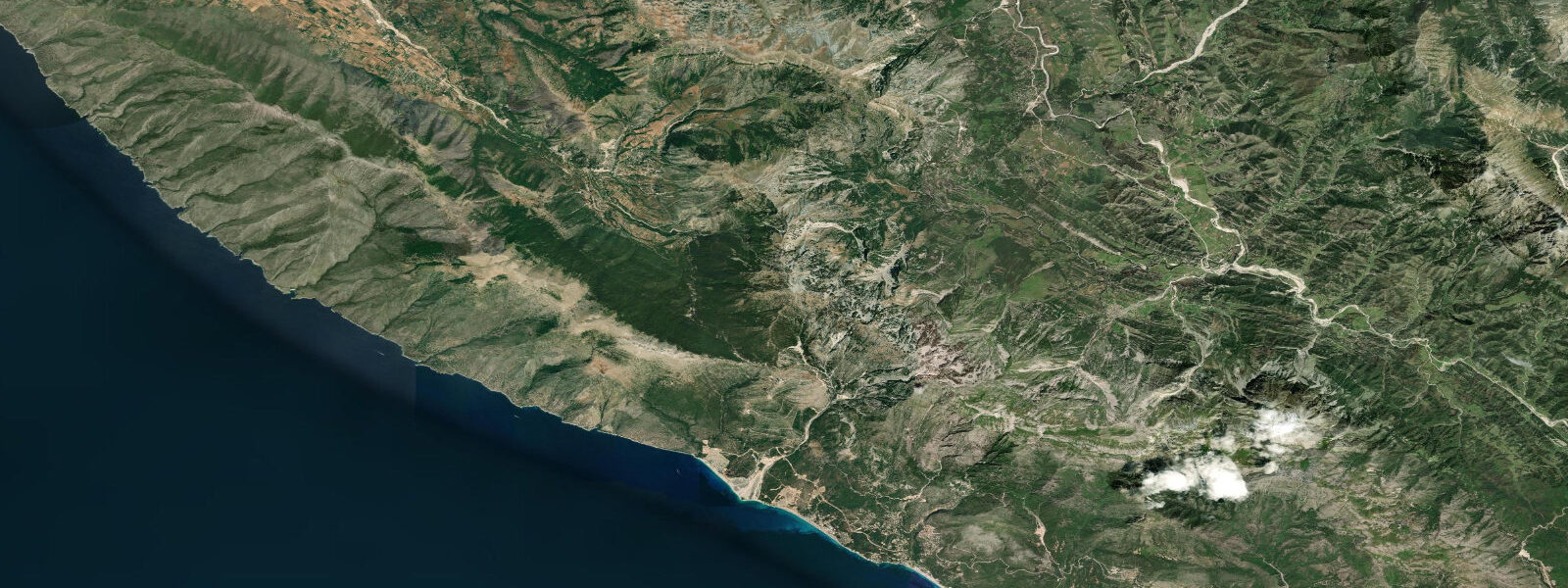
Dhërmi, Vlorë County tide times
Dhërmi, Vlorë County tide forecast — heights relative to MSL.
Today's tide times for Dhërmi, Vlorë County
Tide times at Dhërmi, Vlorë County on Tuesday, 4 August 2026: first low tide at 02:00am, first high tide at 07:00pm. Sunrise 05:40am, sunset 07:53pm.
Tide chart for Dhërmi, Vlorë County
24-hour cosine-interpolated curve around the present moment. Heights relative to MSL. Predictions: Predictions: Open-Meteo Marine (MeteoFrance SMOC, 0.08° grid).
Sun, moon and conditions on Tue 04 Aug
Snapshot at build time — refreshes daily. Sea state from Open-Meteo Marine.
Highs and lows next 7 days
Every predicted high and low for the next week, with the daily tidal coefficient (0–120; higher = bigger swing, > 95 means stronger currents).
Other spots nearby
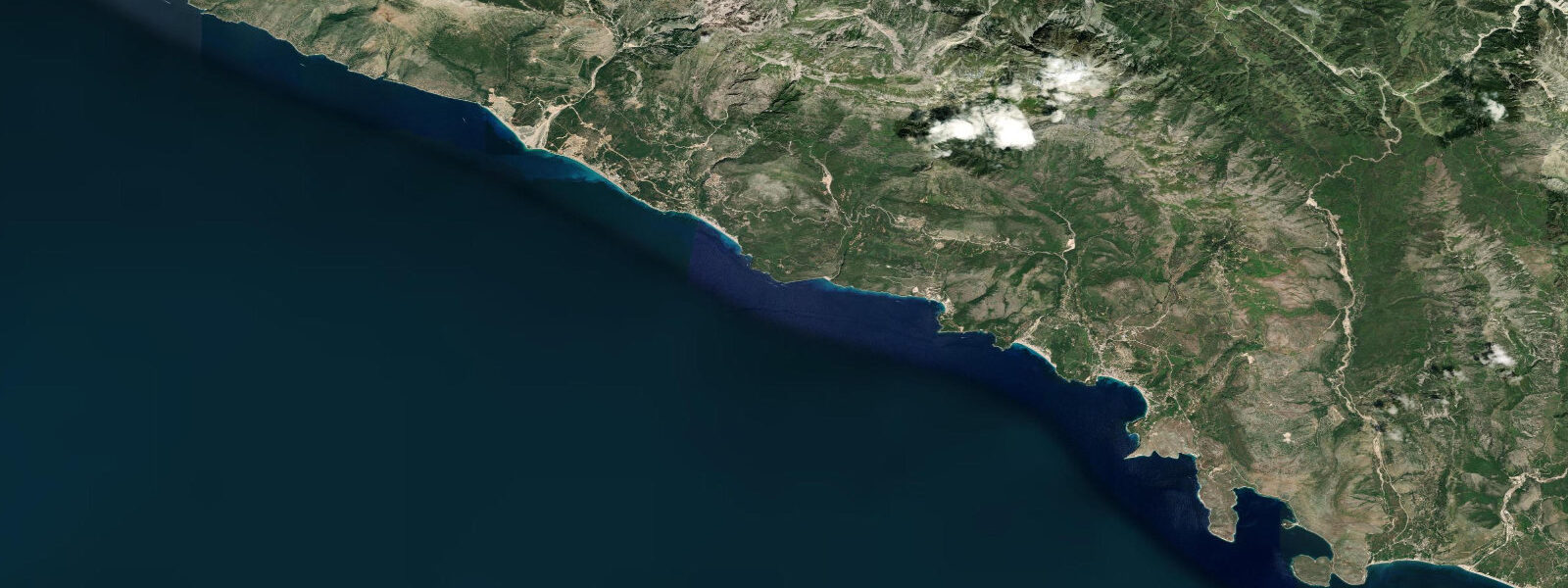
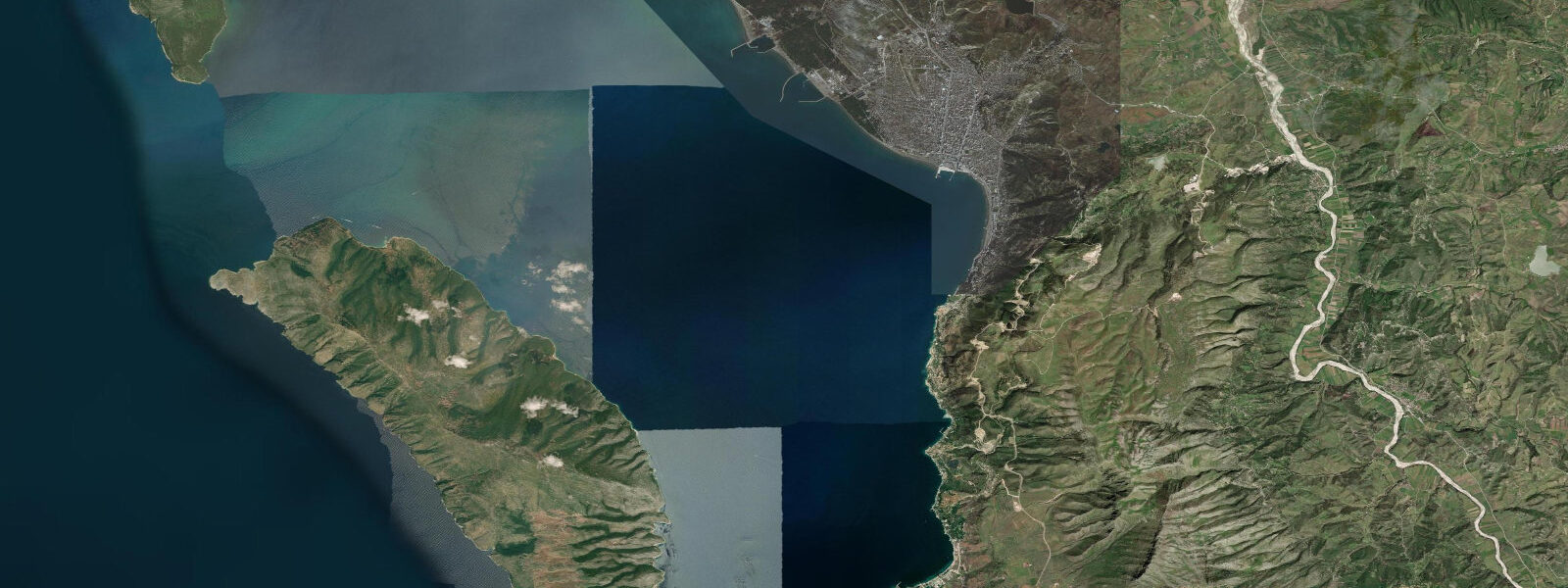
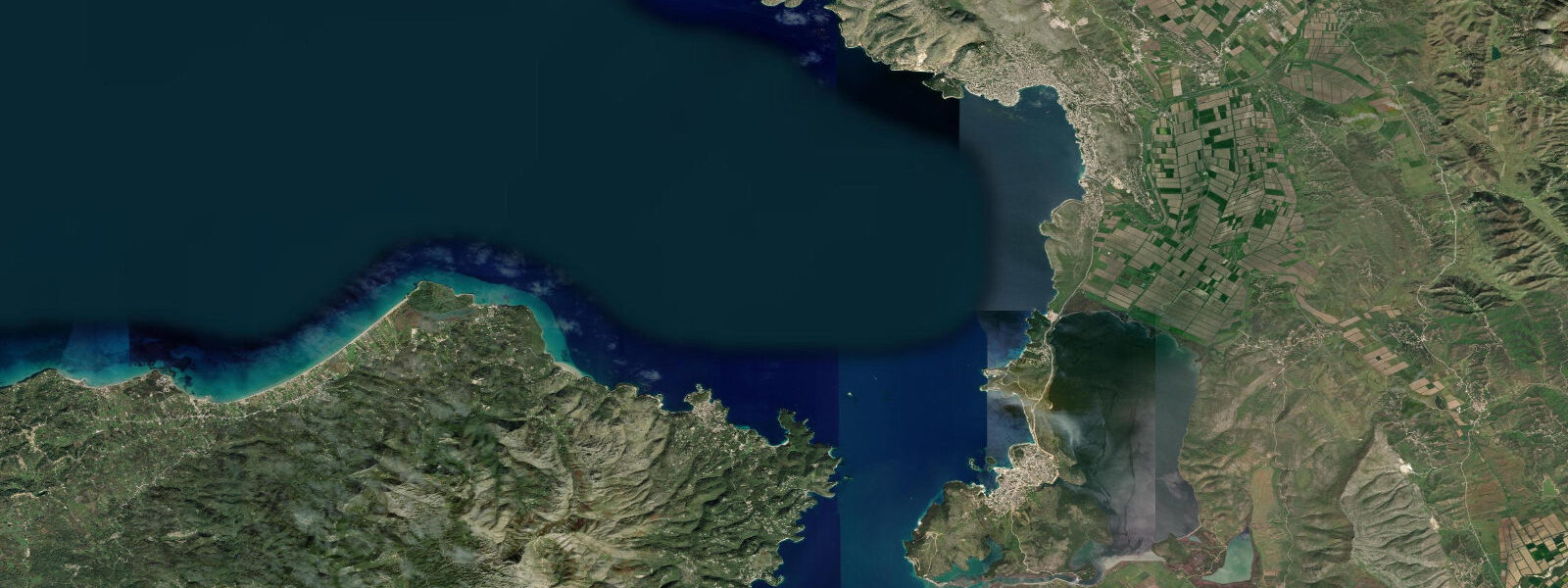
The three closest curated TideTurtle locations to Dhërmi, Vlorë County, measured by great-circle distance.
Today's solunar windows
Solunar tradition: major periods are the ≈3h windows around moon transit and opposition; minor are ≈2h around moonrise and moonset. Pair with the local tide stage and wind for the best read.
About tides at Dhërmi, Vlorë County
A short guide to the coastline at Dhërmi, Vlorë County — geography, sea state, and what the tide is actually doing under your feet.
Dhërmi sits on the western flank of the Ceraunian Mountains — the Çika range — where the road from Vlorë to Sarandë descends in tight switchbacks before revealing one of the Albanian Riviera's most striking beaches. The village itself clings to the slope several hundred metres above sea level; the beach below is reached by a separate road that drops steeply to the coast. That vertical separation has shaped everything about Dhërmi: the hillside community, the relative quiet even at peak season, the sense that you've earned the water by making the journey down.
Dhërmi Beach runs for roughly 800 m, oriented southwest to catch the afternoon sun. The bottom is a mix of fine white sand and smooth pebbles — pebbles dominate near the waterline, sand takes over a metre or two out. The water is turquoise in the shallows and shifts to a deeper blue almost immediately, because the sea floor drops away quickly from the beach face. Visibility on a calm day regularly reaches 20-30 m. That clarity, combined with Posidonia seagrass patches and rocky outcrops just offshore, makes Dhërmi one of the better snorkelling destinations on the Albanian Riviera without requiring a boat.
The Ionian coast at this latitude is essentially microtidal. Mean tidal range runs 0.2-0.4 m — small enough that most visitors never consciously register the tide. The pattern is mixed: two unequal high waters and two unequal low waters per day, with the diurnal inequality sometimes making one of the low waters nearly flat and the other noticeably lower. In practical terms, the tide matters least for swimmers and most for anyone working close to the shoreline: a photographer timing a dawn shoot on the dry upper pebbles, a family setting up on a strip of sand that narrows on a falling tide, a snorkeller trying to thread through a gap between the wave-cut rocks at the south end of the beach.
Dhërmi's beach remained nearly untouched through Albania's Communist period. Under Enver Hoxha's government, private tourism was essentially prohibited and international travel was closed. The coast sat quiet — no resort development, no infrastructure investment. That changed after 1990 when the regime collapsed and Albanians gained freedom of movement, but development has been slow and uneven compared to the Croatian coast or Greek islands. A string of seasonal beach bars and simple accommodation now lines the back of the beach, but the built footprint is modest relative to the beach length. That's changing, and the window on Dhërmi's relative quietness may be short.
Look up from the water and the hillside above the beach is studded with concrete dome shapes — remnants of the Hoxha-era bunker programme. Between 1967 and 1986 Albania constructed an estimated 750,000 QZ-type bunkers across the country, a density of roughly one per 4 km² of territory. The bunkers were designed to be impervious to artillery and gas attack, each poured as a single reinforced concrete dome seated in a socket. Several of the bunkers above Dhërmi beach have partially slid downslope toward the waterline as the hillside erodes; they sit at odd angles in the scrub, still intact because demolishing them is more expensive than leaving them in place. They've become incidental landmarks — easy to spot from the water, confusing if you don't know what you're looking at.
The Ceraunian Mountains — the Çika range in Albanian — form the immediate backdrop. The highest point, Maja e Çikës, reaches 2,045 m and is visible from the beach on clear days as a dramatic grey ridge. The range runs close to the coast, leaving almost no coastal plain; the mountains meet the sea directly in a series of headlands that separate the Albanian Riviera's beaches from one another. This topography means each cove is somewhat self-contained. Dhërmi's neighbours include Palasa, a smaller village and beach a few kilometres to the south, similarly hemmed in by the same geology.
For anglers, the deep water close to shore and the absence of heavy boat traffic in this part of the coast makes Dhërmi worth noting. Sea bream, bass, and various mullet species are present in the rocky ground at the southern headland. The microtidal range means slack-water windows are short and subtle, but they exist — the hour around low tide on a falling-then-rising cycle is typically the cleaner time to fish the nearshore bottom. The beach's southwestern exposure means afternoon winds can build chop by early afternoon in summer, so morning sessions before 10:00 tend to be calmer.
For paddlers, the coastline north and south of Dhërmi is accessible from the beach by kayak or SUP, with the caveats that the road-accessible launch is the beach itself (no separate ramp), and afternoon northwesterly winds can make returns hard. Timing an out-and-back trip to Palasa with an early start avoids most of that.
Tide data for Dhërmi, Vlorë County comes from the Open-Meteo Marine API, a gridded model product. Timing accuracy is ±45 minutes, height accuracy ±0.3 m — usable for trip planning, not for navigation.
Tide questions about Dhërmi, Vlorë County
Quick answers to the most common questions about tide times, range, and water access at Dhërmi, Vlorë County.
What is the tidal range at Dhërmi beach?
The Ionian coast at Dhërmi is microtidal. Mean tidal range runs 0.2-0.4 m — one of the smallest ranges in European waters. The pattern is mixed semi-diurnal: two high waters and two low waters per day, with unequal heights. A typical low water might reach 0.05 m above chart datum, while a spring low can touch near 0.0 m. For swimmers and sunbathers the difference is rarely noticeable. For photographers or snorkellers working the rocky edges, checking the tide chart before heading out avoids getting stranded on a narrowing strip of pebble at an inconvenient moment.
What are the concrete bunkers visible above Dhërmi beach?
They are QZ-type military bunkers built during the Enver Hoxha era (1967-1986). Albania constructed approximately 750,000 of them nationwide — one of the most intensive bunkerisation programmes in history. Each is a single-pour reinforced concrete dome seated in a concrete socket, designed to resist artillery and gas. The bunkers above Dhërmi beach have partially slid downslope as the hillside erodes, putting some of them close to the waterline. Demolition is prohibitively expensive, so they remain in place. Several have been repurposed elsewhere in Albania as cafés or art installations, but the ones on the Dhërmi hillside are disused.
Is the snorkelling at Dhërmi worth doing from the shore?
Yes, notably so for a beach that requires no boat. Visibility on calm days reaches 20-30 m. The sea floor drops quickly from the shoreline, so even 20-30 m from the water's edge you're over 2-4 m of depth. Rocky outcrops at the southern end of the beach hold sea bream, wrasse, and octopus. Posidonia seagrass patches appear at 4-6 m. The microtidal range is so small it has negligible effect on visibility — water clarity is driven by sea state, not tidal stage. Best conditions are early morning on days following calm overnight wind.
When is the best time to visit Dhërmi to avoid crowds?
June and September give the best balance. July and August see the heaviest Albanian and international visitor traffic, and parking on the road down to the beach becomes a bottleneck. The beach bars operate May through October. In early June the water has warmed to roughly 22°C and the beach is far quieter than peak season. September water temperatures hold at 24-25°C and crowds thin significantly after the first week. The Ceraunian Mountains provide afternoon shade on the upper pebbles from mid-afternoon, which is more useful in the shoulder months when the sun angle is lower.
Can kayakers launch from Dhërmi and paddle to nearby coves?
The beach is the only practical launch point — there is no dedicated ramp, but the gently shelving pebble shoreline works fine for sit-on-top kayaks and inflatables. Palasa, the next cove south, is roughly 3 km by water and reachable in under an hour in calm conditions. The critical timing note: afternoon northwesterly winds build along this coast most summer days, typically strengthening after 13:00-14:00. Launching by 07:30-08:00 and completing the out-and-back before the wind builds is the standard approach. The microtidal current is negligible and not a paddling factor.
8-day tide table — Dhërmi, Vlorë County
Heights relative to MSL. Predictions: Open-Meteo Marine (MeteoFrance SMOC, 0.08° grid) — heights relative to MSL (not chart datum / LAT). Model-derived.
| Day | Type | Time | Height |
|---|---|---|---|
| Tue 04 Aug | Low | 02:00 | -0.6m |
| High | 19:00 | -0.4m | |
| Wed 05 Aug | Low | 01:00 | -0.6m |
| Thu 06 Aug | — | ||
| Fri 07 Aug | — | ||
| Sat 08 Aug | High | 13:00 | -0.3m |
| Sun 09 Aug | Low | 07:00 | -0.5m |
| High | 13:50 | -0.3m | |
| Mon 10 Aug | Low | 21:10 | -0.5m |
| Tue 11 Aug | High | 01:00 | -0.4m |